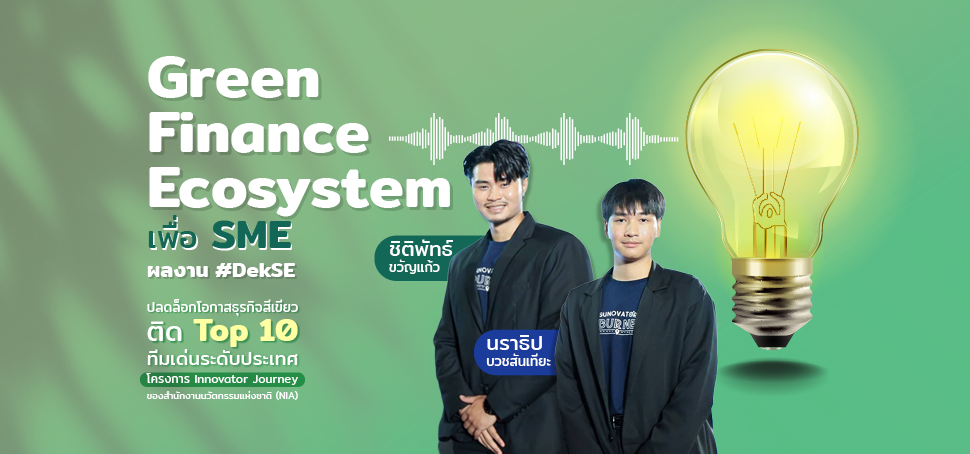
Chitipath Khwankaew and Narathip Buachasantiah
Students majoring in Interdisciplinary Technology and Innovation.
Faculty of Entrepreneurship Sripatum University
Amidst the global business transformation towards a “green economy,” the term Green Finance may not be new, but for many Thai SMEs, it represents an opportunity that remains difficult to access and fraught with complexity.
This marks the beginning of the “Green Finance Ecosystem for SMEs” project, a collaboration between Chitipat Khwankaew and Narathip Buachasantiah, students in the Interdisciplinary Technology and Innovation program at the Faculty of Entrepreneurship, Sripatum University. They developed the project in partnership with students from other institutions and worked with a real-world company, Bonkongngenkongthong Co., Ltd., to create a practical green financial ecosystem for SMEs.
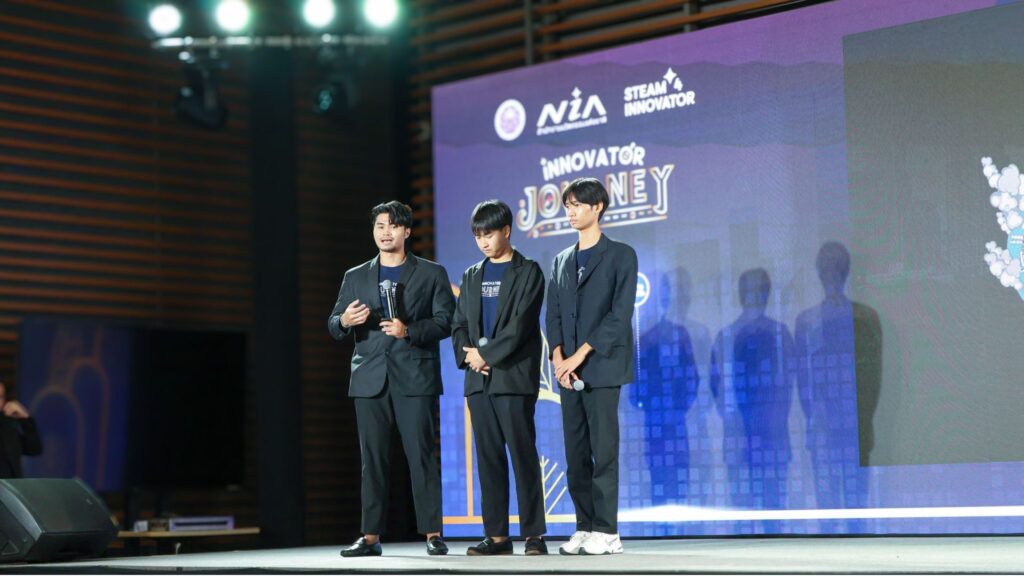
This project has been selected as one of the top 10 outstanding teams nationwide from the Innovator Journey competition organized by the National Innovation Agency (NIA), reflecting the potential of SPU students who not only learn but also can create solutions that address real-world economic needs.
"Green Finance isn't difficult...but nobody has explained it properly yet."
Chitipath explained that the project’s starting point came from conducting fieldwork and discovering that SMEs didn’t reject Green Finance , but they didn’t understand it and didn’t know where to start. The main pain points identified included the complexity of financial and tax information, the lack of clarity in investment plans such as solar cells or energy saving , and the incomplete documentation for accessing funding. These factors turned opportunities into barriers for entrepreneurs.
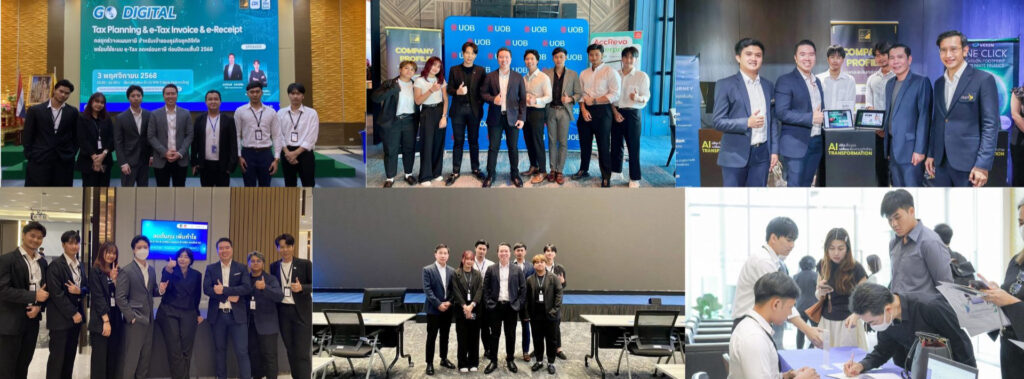
From difficult-to-find data to a "practical tool".
The Green Finance Ecosystem is therefore designed under the concept of “transforming complex knowledge into business decisions.” The solution development team goes beyond simply providing knowledge; they actively assist in the decision-making process through three key mechanisms: in-depth business analysis using the Business Model Canvas to assess the cost-effectiveness of green investments suitable for each SME; communication through digital content, including short videos and infographics, that explains Green Finance in an easy-to-understand and accessible way; and the design of checklists for entrepreneurs to prepare for accessing funding sources.
What makes this project stand out is the integration of “Business Innovation + Media Design,” transforming ESG and finance knowledge beyond theory into something easily understood and immediately applicable.
Create a real impact through the power of content.
Another key aspect of the project was using social media as a primary tool for driving engagement, including TikTok, Facebook, and YouTube, to reach emerging SMEs. The result was a communication impact reaching over 2.2 million views, not only disseminating knowledge but also changing perceptions of Green Finance, transforming it from a distant concept into something tangible.
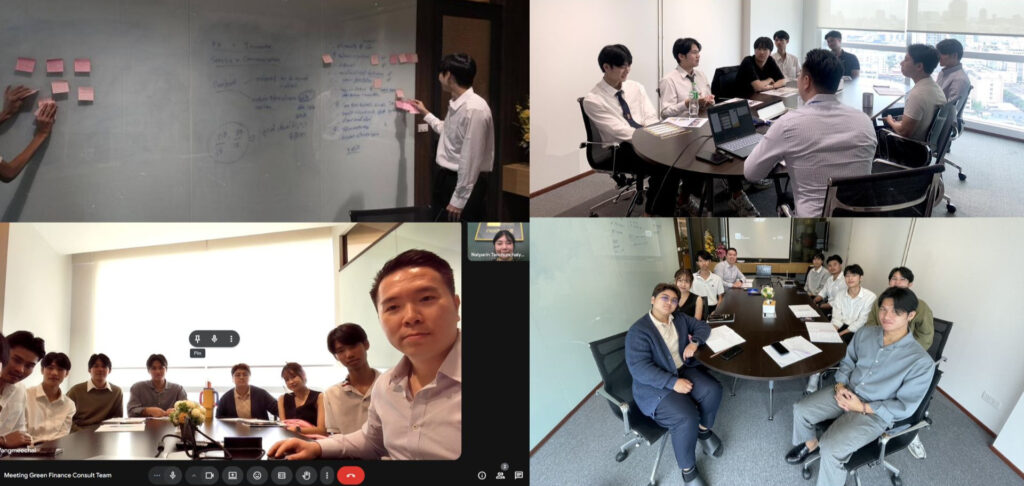
Real-life experiences that transform "students" into "entrepreneurs".
Chitipath said that working with real businesses was a crucial turning point. It made him move away from thinking in terms of studying for exams and start thinking about solving real business problems. He learned to work with accounting and tax experts, analyze on-site problems, and design solutions that met customer needs. This reflects the fact that modern businesses must understand Business + Sustainability + Technology simultaneously.
Green Finance = Business opportunities, not costs.
What this project is clearly trying to communicate is that Green Finance is not a burden, but a tool to enhance the competitiveness of SMEs. It allows them to reduce long-term energy costs, access tax benefits, and elevate their business image to a new standard. At the same time, it helps drive the Thai economy towards a concrete Green Transition.
Voices from #DekSE towards the future of the Thai economy.
“This project made me see business not just as profit, but as creating an impact on society,” says Chitipath, reflecting the image of a new generation entrepreneur who isn’t just looking at opportunities for himself, but is designing the future of the Thai economy. This is another testament to the ability of Sripatum University students to transform classroom knowledge into practical innovations.
The Green Finance Ecosystem for SMEs is therefore not just a student project, but a model for driving Thai businesses towards true sustainability.
#SripatumUniversity #SPU #FacultyofEntrepreneurship #SPUExperiencedLearners #DEKSPU #showcase