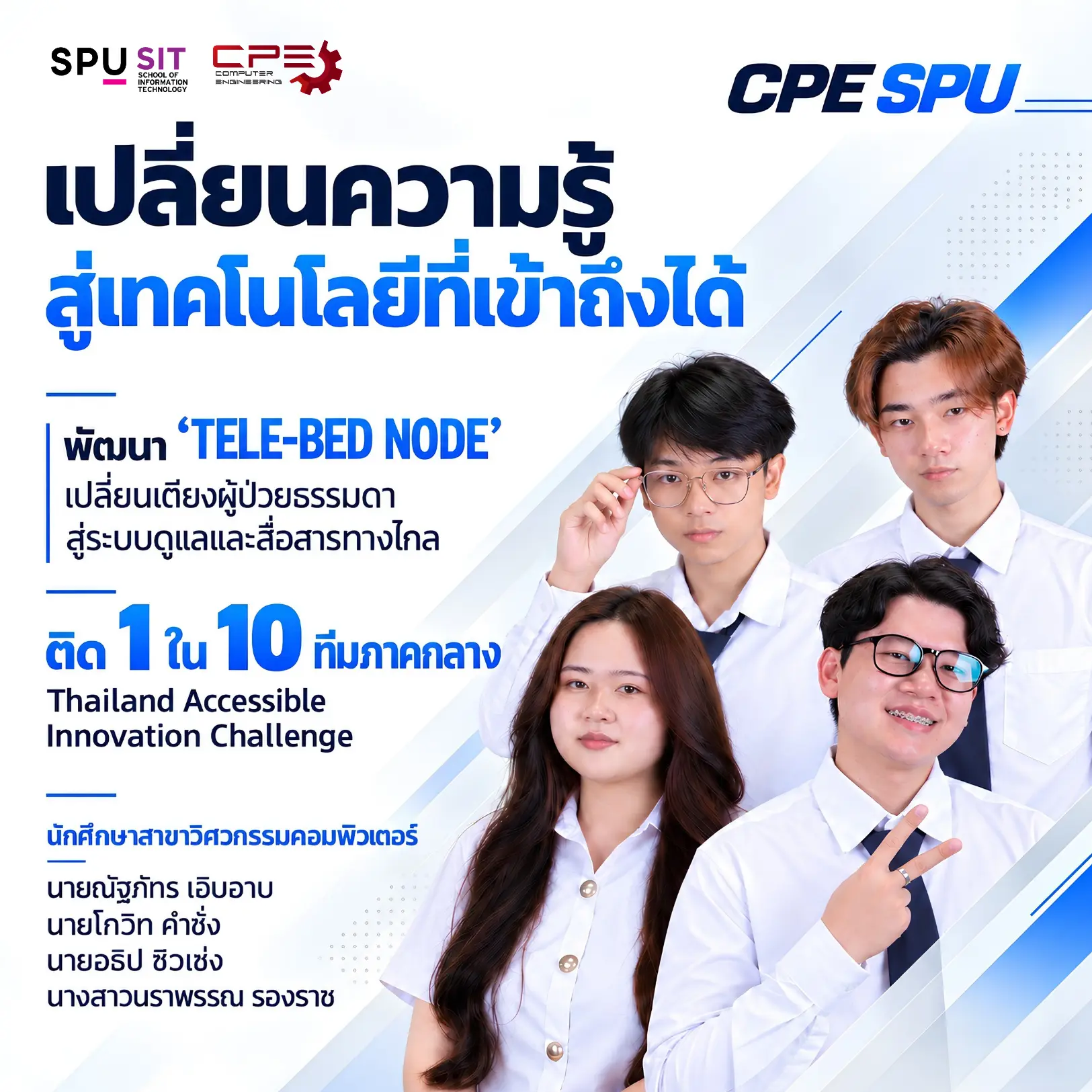
นักศึกษาวิศวกรรมคอมพิวเตอร์ SPU โชว์ศักยภาพนวัตกร “Tele-Bed Node” ผ่านเข้ารอบ Thailand Accessible Innovation Challenge ติด 1 ใน 10 ทีมภาคกลาง
นักศึกษาสาขาวิชาวิศวกรรมคอมพิวเตอร์ คณะเทคโนโลยีสารสนเทศ มหาวิทยาลัยศรีปทุม ที่ผ่านการคัดเลือกเข้าสู่การแข่งขัน Thailand Accessible Innovation Challenge เป็นหนึ่งใน 50 ทีมที่ผ่านเข้ารอบจากภูมิภาคต่าง ๆ ทั่วประเทศ และติด 1 ใน 10 ทีมระดับภาคกลาง ด้วยผลงานนวัตกรรม “Tele-Bed Node: ชุดอุปกรณ์เสริมเตียงอัจฉริยะเพื่อการสื่อสารและช่วยเหลือทางไกล”
สมาชิกทีมประกอบด้วย นายณัฐภัทร เอิบอาบ นายโกวิท คำชั่ง นายอธิป ซิวเซ่ง และนางสาวนราพรรณ
Tele-Bed Node เป็นชุดอุปกรณ์เสริมแบบ IoT Add-on ที่ออกแบบมาเพื่อติดตั้งและดัดแปลงเข้ากับเตียงผู้ป่วยแบบมือหมุนทั่วไป โดยไม่จำเป็นต้องเปลี่ยนหรือซื้อเตียงอัจฉริยะเครื่องใหม่ ชุดอุปกรณ์ดังกล่าวช่วยเปลี่ยนระบบการปรับเตียงให้ควบคุมด้วยไฟฟ้า พร้อมเพิ่มระบบสื่อสาร การแจ้งเตือน และการติดตามดูแลจากระยะไกล เหมาะสำหรับผู้ป่วยติดเตียง ผู้สูงอายุ ผู้พิการ ตลอดจนผู้ที่ต้องการความช่วยเหลือในการใช้ชีวิตประจำวัน
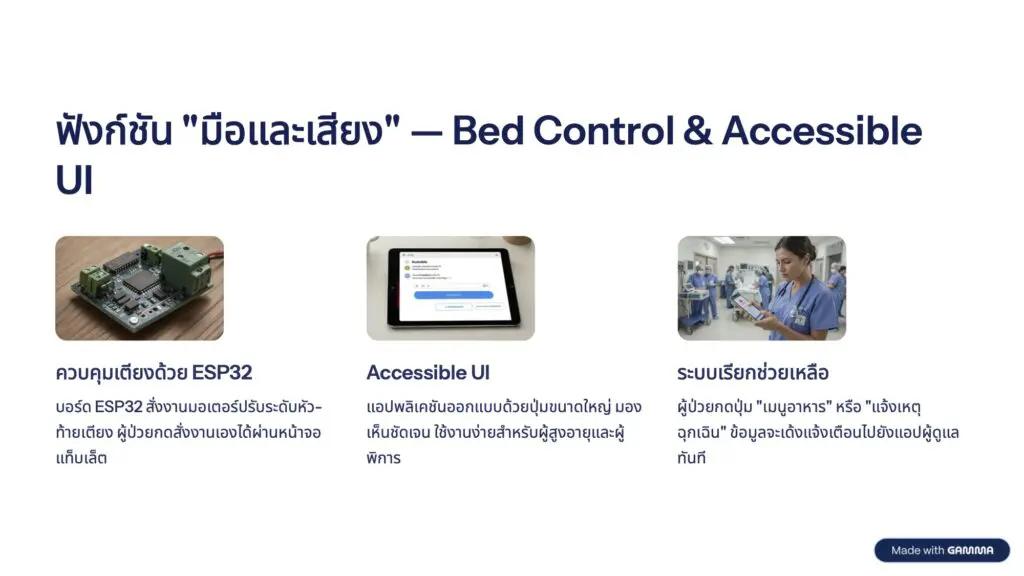
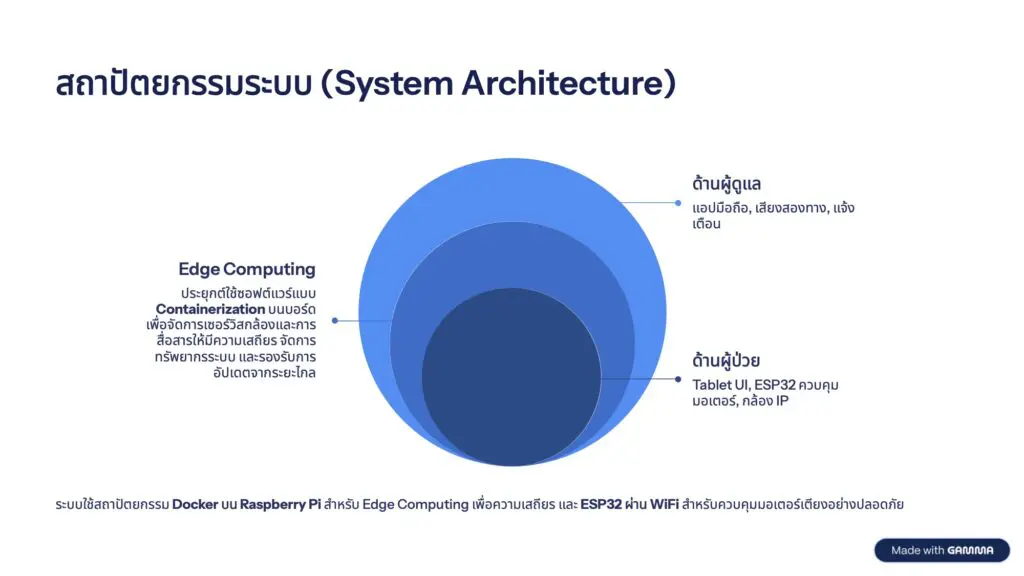
ระบบประกอบด้วยบอร์ด ESP32 สำหรับควบคุมการทำงานของมอเตอร์ หน่วยประมวลผลแบบ Edge Computing กล้อง IP ระบบเสียงสื่อสารสองทาง และหน้าจอควบคุมที่ออกแบบตามหลักการเข้าถึงสำหรับทุกคน โดยใช้ปุ่มขนาดใหญ่ มองเห็นได้ชัดเจน และใช้งานง่าย ผู้ป่วยสามารถปรับระดับเตียง แจ้งความต้องการพื้นฐาน หรือส่งสัญญาณขอความช่วยเหลือไปยังผู้ดูแลได้ ขณะที่ญาติหรือบุคลากรทางการแพทย์สามารถติดตามอาการ สื่อสาร และให้ความช่วยเหลือจากระยะไกลได้อย่างทันท่วงที
ผลงานดังกล่าวเกิดจากการบูรณาการองค์ความรู้ที่นักศึกษาได้รับจากหลายรายวิชา ได้แก่ Design Thinking, Artificial Intelligence of Things (AIoT), Embedded Systems, Computer Networks, ระบบไฟฟ้า และ Operating Systems ครอบคลุมตั้งแต่กระบวนการทำความเข้าใจปัญหาและความต้องการของผู้ใช้งาน การออกแบบนวัตกรรมโดยยึดผู้ใช้เป็นศูนย์กลาง การเชื่อมต่อและควบคุมอุปกรณ์ IoT การพัฒนาระบบสมองกลฝังตัว การออกแบบวงจรไฟฟ้าที่คำนึงถึงความปลอดภัย การวางระบบเครือข่ายเพื่อเชื่อมโยงอุปกรณ์และรองรับการสื่อสารทางไกล ตลอดจนการบริหารจัดการซอฟต์แวร์และทรัพยากรของระบบอย่างมีประสิทธิภาพ
จุดเด่นของ Tele-Bed Node คือแนวคิดการพัฒนานวัตกรรมที่สามารถนำไปใช้ได้จริงและเข้าถึงได้ในราคาที่เหมาะสม ด้วยการนำเตียงผู้ป่วยเดิมมาปรับปรุงให้มีความสามารถใกล้เคียงกับเตียงไฟฟ้าอัจฉริยะ ช่วยลดค่าใช้จ่ายจากระดับหลักหมื่นหรือหลักแสนบาทให้เหลือเพียงระดับหลักพันบาท เปิดโอกาสให้ครอบครัวที่มีรายได้น้อย สถานสงเคราะห์ หน่วยงานสาธารณสุข และศูนย์ดูแลผู้ป่วยขนาดเล็ก สามารถเข้าถึงเทคโนโลยีเพื่อการดูแลสุขภาพได้มากยิ่งขึ้น
นวัตกรรมชิ้นนี้ไม่ได้มุ่งเน้นเพียงการพัฒนาเทคโนโลยีเท่านั้น แต่ยังให้ความสำคัญกับคุณภาพชีวิต ศักดิ์ศรีความเป็นมนุษย์ และความสามารถในการช่วยเหลือตนเองของผู้ป่วย ระบบช่วยให้ผู้ป่วยสามารถสื่อสารความต้องการและขอความช่วยเหลือได้สะดวกขึ้น พร้อมช่วยลดภาระ ความเครียด และความกังวลของญาติหรือผู้ดูแลที่ไม่สามารถอยู่ข้างเตียงได้ตลอด 24 ชั่วโมง
Tele-Bed Node จึงเป็นอีกหนึ่งตัวอย่างของการนำองค์ความรู้ด้านวิศวกรรมคอมพิวเตอร์มาพัฒนาเป็นนวัตกรรมที่ช่วยลดช่องว่างในการเข้าถึงอุปกรณ์ทางการแพทย์ และเปิดทางสู่ความเท่าเทียมในสังคม โดยมุ่งหวังให้ทุกคนสามารถเข้าถึงเทคโนโลยีการดูแลที่มีคุณภาพได้ โดยไม่ถูกจำกัดด้วยสภาพร่างกาย ฐานะทางเศรษฐกิจ หรือบริบทของครอบครัว ภายใต้แนวคิดสำคัญว่า “เทคโนโลยีที่ดีต้องเป็นเทคโนโลยีที่ทุกคนเข้าถึงได้ และไม่ทิ้งใครไว้ข้างหลัง”
“Tele-Bed Node” — Accessible Innovation Takes
SPU Computer Engineering Students to Central Thailand’s Top 10
Headline: SPU Computer Engineering Students Transform Conventional Patient Beds with “Tele-Bed Node,” Advancing in the Thailand Accessible Innovation Challenge with Technology Designed to Leave No One Behind
What if patients could access smart care technology without having to purchase an expensive new smart bed? That question inspired “Tele-Bed Node,” an IoT add-on for patient beds developed by Computer Engineering students from the School of Information Technology, Sripatum University. The innovation was selected among 50 teams nationwide in the Thailand Accessible Innovation Challenge and ranked among the Top 10 teams in the Central Region.
The team consists of Nattapat Oeb-aab, Kowit Khamchang, Athip Siewseng and Naraphan. Together, they developed an add-on system designed to upgrade conventional manual patient beds with electric control, communication, alerts and remote-care capabilities without replacing the entire bed.
Tele-Bed Node integrates an ESP32 motor controller, Edge Computing, an IP camera, two-way audio and an accessible control interface featuring large, highly visible and easy-to-use buttons. Patients can adjust their beds, communicate basic needs or request assistance, while family members and caregivers can communicate and provide remote support.
The project integrates knowledge from Design Thinking, Artificial Intelligence of Things (AIoT), Embedded Systems, Computer Networks, electrical systems and Operating Systems. Students moved from understanding user needs and human-centred design to embedded control, electrical safety, networking and remote communication—turning classroom knowledge into a prototype addressing a real-life challenge.
Accessibility is central to the innovation. Instead of requiring users to purchase an entirely new smart bed, Tele-Bed Node aims to upgrade existing equipment and reduce costs from tens or hundreds of thousands of baht to the thousand-baht range. This concept could expand access for lower-income families, care homes, public health organisations and smaller patient-care centres.
The project reflects the broader intent of SDG 3: Good Health and Well-being, particularly the context of SDG 3.3 Collaborations and Health Services; SDG 9: Industry, Innovation and Infrastructure through practical technology development; and SDG 10: Reduced Inequalities, particularly the intent of SDG 10.6 Measures Against Discrimination in reducing barriers and improving accessibility for people with disabilities and those requiring additional support. Formal THE Impact Rankings claims at sub-indicator level, however, require additional evidence specific to each metric.
Tele-Bed Node therefore begins not with the question, “What can technology do?” but with a more human question: “Whose life can technology make better?” Its value lies not only in engineering complexity, but in the possibility of making useful technology accessible to more people.
#SPU #SPUSDGs #TeleBedNode #AccessibleInnovation #ComputerEngineering