
เปิดทางการเรียนรู้เทคโนโลยีอย่างมั่นใจ วช. ขับเคลื่อน “การใช้ AI ในการวิจัยอย่างมีจริยธรรม” จัดเสวนา-เตรียมอบรมภาคปฏิบัติ ลดข้อจำกัดการเข้าถึงทักษะดิจิทัลสำหรับนักวิจัยและนักศึกษา
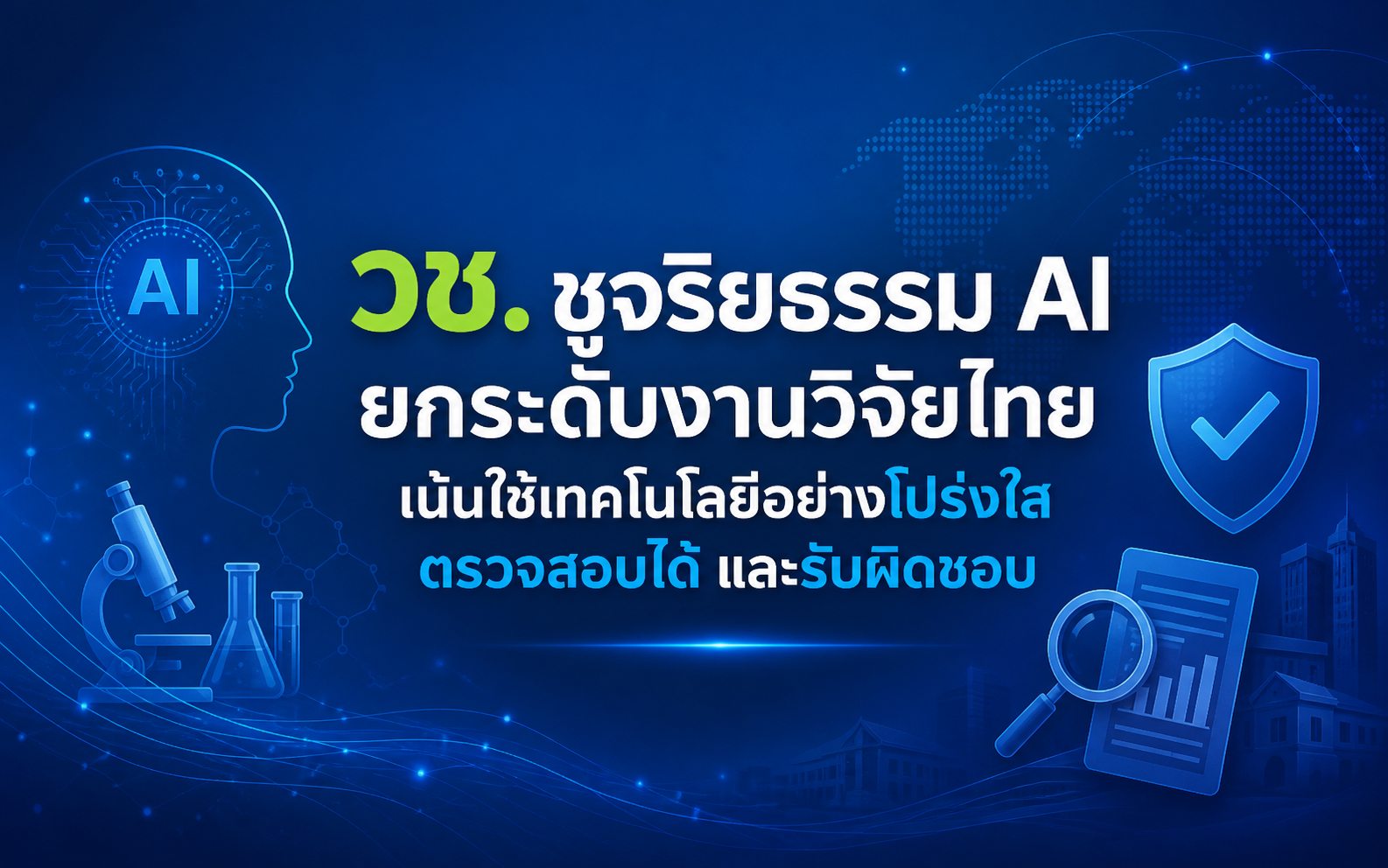
สำนักงานการวิจัยแห่งชาติ (วช.) กระทรวง อว. เดินหน้าตั้ง “รั้วจริยธรรม” ให้การใช้ AI ในการวิจัยปลอดภัย โปร่งใส และตรวจสอบได้ ผ่านงานแถลงข่าวและเสวนาวิชาการ “การใช้ AI ในการวิจัยอย่างมีจริยธรรม” เมื่อวันที่ 22 กันยายน 2569 ณ ศูนย์สารสนเทศกลางด้านวิทยาศาสตร์ วิจัยและนวัตกรรม วช. โดยมี ดร.วิภารัตน์ ดีอ่อง ผู้อำนวยการ วช. เป็นประธาน พร้อมผู้ทรงคุณวุฒิร่วมแลกเปลี่ยนมุมมองเพื่อแปลงหลักการสู่แนวทางปฏิบัติที่ใช้ได้จริงในห้องวิจัยและห้องเรียน
ดร.วิภารัตน์ย้ำว่า วช. สนับสนุนการใช้ AI ควบคู่มาตรฐานจริยธรรม โดยมุ่งพัฒนาแนวปฏิบัติสำหรับนักวิจัย หน่วยงานวิจัย และสถาบันการศึกษา เพื่อให้การใช้ AI เหมาะสม โปร่งใส รับผิดชอบ สร้างความเชื่อมั่นต่อคุณภาพงานวิจัยไทย พร้อมชี้ว่า AI ช่วยได้ตั้งแต่สืบค้น วิเคราะห์ ไปจนถึงจัดทำรายงาน แต่ความเสี่ยงเรื่องการลอกเลียนและการใช้เนื้อหาหรือภาพที่สร้างด้วย AI อย่างไม่เหมาะสมยังเป็นโจทย์สำคัญ จึงต้องมีแนวทางที่นำไปใช้ได้จริงและถ่ายทอดสู่เครือข่ายวิจัยและการศึกษา
รองศาสตราจารย์ ดร.ประมา ศาสตระรุจิ ที่ปรึกษาด้านระบบวิจัย วช. ระบุว่า หัวใจของจริยธรรม AI คือความเข้าใจผลกระทบต่อความถูกต้อง ความน่าเชื่อถือ และสิทธิของผู้เกี่ยวข้อง นักวิจัยต้องพิจารณาตั้งแต่ข้อมูลนำเข้า การตรวจสอบผลลัพธ์ ไปจนถึงการเผยแพร่ พร้อม “เปิดเผยการใช้ AI” อย่างเหมาะสมและรับผิดชอบ โดยเสนอกรอบจริยธรรม 6 ด้าน ได้แก่ 1) ความถูกต้องและความน่าเชื่อถือ 2) ความโปร่งใสและการเปิดเผย 3) ความปลอดภัยของข้อมูลและความเป็นส่วนตัว 4) ทรัพย์สินทางปัญญาและการรักษาความลับ 5) ความเป็นธรรม ความเสมอภาค และการจัดการอคติ 6) ความรับผิดชอบ การกำกับดูแล และการตรวจสอบย้อนหลัง แนวทางนี้ช่วยให้ผู้ปฏิบัติงาน “อธิบายได้-ตรวจสอบได้” ตั้งแต่ต้นน้ำถึงปลายน้ำของงานวิจัย
ในระดับองค์กร ดร.ประมาเสนอให้กำหนดขอบเขตการใช้งาน วิธีดูแลข้อมูล บทบาทผู้ตรวจสอบผลงาน และขั้นตอนเมื่อพบข้อผิดพลาด/อคติจาก AI อย่างชัดเจน เพื่อให้บุคลากรตัดสินใจได้จริงในงานแต่ละประเภท พร้อมย้ำแนวคิด “โปร่งใส ปลอดภัย เป็นธรรม และรับผิดชอบ” เป็นเข็มทิศการใช้ AI
ภายในงานมีการเสวนาวิชาการโดย ศาสตราจารย์ นายแพทย์ยง ภู่วรวรรณ ศาสตราจารย์ ดร.ธีรยุทธ วิไลวัลย์ และรองศาสตราจารย์ ดร.ชัชวาล วงศ์ชูสุข ดำเนินรายการโดย รองศาสตราจารย์ ดร.ประมา นำเสนอประสบการณ์จริง กรณีศึกษา และข้อควรระวังสำหรับ Generative AI ในงานวิจัย ทั้งนี้ วช. เตรียมจัดอบรมแนวทางการใช้ AI อย่างมีจริยธรรมในเดือนพฤศจิกายน 2569 และขยายการอบรมสู่หน่วยงานวิจัยและสถาบันการศึกษาทุกภูมิภาคต่อเนื่องในปี 2570 เพื่อต่อยอดสู่การปฏิบัติและยกระดับมาตรฐานงานวิจัยของประเทศ
สำหรับชุมชนเทคโนโลยีและนักศึกษา การมีกรอบจริยธรรมและการอบรมภาคปฏิบัติที่เข้าถึงได้ จะช่วย “ลดข้อจำกัดการเข้าถึงการเรียนรู้” ด้าน AI ทำให้สามารถนำเครื่องมือสมัยใหม่เข้าไปอยู่ในเวิร์กโฟลว์การวิจัยและการเรียนได้อย่างมั่นใจ เคารพสิทธิและข้อมูลส่วนบุคคล และรักษาความน่าเชื่อถือของผลงาน
Opening the door to responsible AI learning: Thailand’s NRCT convenes experts on “Ethical Use of AI in Research,” with practical trainings to broaden access for researchers and students
Thailand’s National Research Council (NRCT), Ministry of Higher Education, Science, Research and Innovation, put ethical guardrails around AI in research through a press conference and academic seminar titled “Ethical Use of AI in Research” on 22 September 2026 at the NRCT’s Central Information Center. Led by Dr. Wiparat De-Ong, NRCT Director, the session brought together eminent experts to turn principles into practical guidance for labs and classrooms.
Dr. Wiparat underscored NRCT’s commitment to promote AI adoption alongside ethical standards by developing actionable guidance for researchers, research agencies, and educational institutions—ensuring appropriate, transparent, and responsible AI use that upholds research quality. While AI now supports literature discovery, analysis, and reporting, she cautioned about risks of plagiarism and inappropriate use of AI-generated content or images, stressing the need for guidance that can be implemented and shared across research and education communities.
Assoc. Prof. Dr. Prama Sastraruji, NRCT Research Systems Advisor, emphasized that ethical AI hinges on understanding impacts on accuracy, credibility, and stakeholder rights. Researchers must assess data inputs, verify outputs, and disclose AI use responsibly. He outlined six pillars: accuracy and reliability; transparency and disclosure; data security and privacy; intellectual property and confidentiality; fairness, equity, and bias mitigation; and accountability, governance, and auditability—enabling explainable and verifiable research from start to finish.
At the organizational level, he called for clear boundaries of use, data stewardship methods, defined reviewer roles, and response steps when AI outputs show errors or bias—so staff can make sound, context-specific decisions. The guiding ethos: “transparent, safe, fair, and responsible.”
The seminar featured contributions from Prof. Yong Poovorawan, Prof. Dr. Teerayuth Wilaiwan, and Assoc. Prof. Dr. Chatchawan Wongchoosuk, moderated by Assoc. Prof. Dr. Prama, sharing real cases and cautions for Generative AI in research. NRCT announced a hands-on training on ethical AI use in November 2026, with regional expansions across research agencies and educational institutions in 2027 to embed practice and uphold national research standards.
For technology communities and students, clear ethics frameworks plus practical training lower barriers to AI learning and adoption—enabling modern tools to be integrated confidently into research and coursework while respecting privacy, protecting rights, and preserving research integrity.
ที่มา: