จากซิลิคอนถึงดิสทริบิวชัน: เมื่อศูนย์รวมโมเดลเปิดอาจอยู่ใต้ปีกผู้ผลิตจีพียูรายใหญ่—ความเป็นกลาง พกพา และ “ประตูสู่โมเดล” สำหรับนักพัฒนา
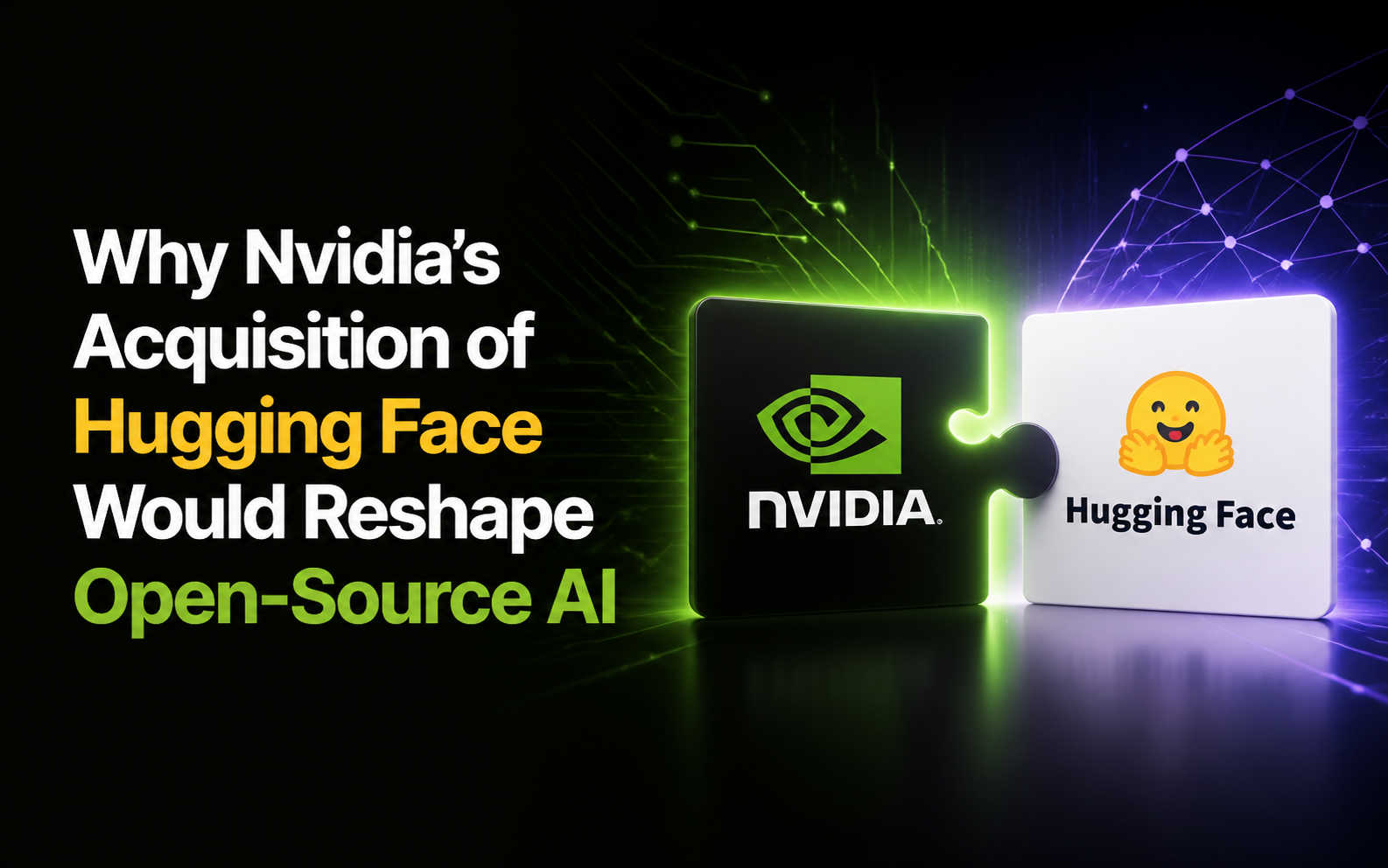
รายงานระบุว่า Nvidia บรรลุข้อตกลงซื้อกิจการ Hugging Face มูลค่า 12.9 พันล้านดอลลาร์ การควบรวมครั้งนี้หากเกิดขึ้นจริง จะทำให้ศูนย์กลางโมเดลโอเพ่นเวตส์ที่ใหญ่ที่สุดในโลกอยู่ภายใต้เจ้าของเดียวกับผู้ผลิตจีพียูรายใหญ่สุดของอุตสาหกรรม—เท่ากับรวม “ท่อส่งโอเพ่นซอร์ส AI” ตั้งแต่ซิลิคอนไปจนถึงชั้นดิสทริบิวชันไว้ในมือบริษัทเดียว
เพื่อเห็นภาพชั้นโครงสร้าง: Hugging Face ไม่ใช่ห้องปฏิบัติการโมเดลแบบ OpenAI หรือ Anthropic แต่คือโครงสร้างพื้นฐานของระบบนิเวศเปิด—ศูนย์รวมโมเดลและเวตส์ ไลบรารี datasets ไลบรารี Transformers สำหรับโหลดโมเดล และ Spaces สำหรับเดโม ขณะที่ Nvidia ครองชั้นคอมพิวต์ด้วยจีพียูและซอฟต์แวร์ CUDA และเพิ่งประกาศรายได้ไตรมาสทำสถิติที่ 96.2 พันล้านดอลลาร์ พร้อมภาระผูกพันอนาคต 366 พันล้านดอลลาร์ อีกทั้งได้ร่วมกับพันธมิตรสนับสนุนการคงความเปิดของโมเดลต่อภาครัฐสหรัฐ
เหตุผลเชิงยุทธศาสตร์ชัดเจน: ชั้นดิสทริบิวชันที่เคยเป็นกลางเปิดให้ใครก็ได้ดึงโมเดลไปใช้งาน อาจกลายเป็นประตูเริ่มต้นที่พานักพัฒนาไปสู่คลาวด์ เครื่องมือ มาตรฐาน และตัวเร่งของเจ้าของแพลตฟอร์ม—ไม่จำเป็นต้อง “ปิดกั้น” คู่แข่ง แต่ทำให้เส้นทางที่สะดวกที่สุดวิ่งบนสแตกของ Nvidia โดยธรรมชาติ
มุมมองเชิงตลาดก็หนุนน้ำหนักดีล: ขณะที่ห้องแล็บจีนอย่าง Z.ai และ Qwen ของ Alibaba รุกหนักด้วยโมเดลเปิดที่ทำคะแนนบนเบนช์มาร์กได้ท้าทายผู้นำแบบปิดของสหรัฐ การควบรวม “ฮาร์ดแวร์+ชั้นวางโมเดล” ให้ข้อได้เปรียบเชิงโครงสร้างที่คู่แข่งปิดล้วนทำตามได้ยาก อีกด้านหนึ่ง การผลักดันโอเพ่นซอร์สของ Nvidia อาจสะท้อนความตั้งใจรักษาสุขภาพระบบนิเวศเปิด—ซึ่งท้ายที่สุดผลักดีมานด์จีพียูของตนเอง
ผลกระทบเชิงปฏิบัติที่ชัดเจนสำหรับนักพัฒนาและนักศึกษา AI คือ “พกพา” กับ “ประตูเริ่มต้น” ใบอนุญาตโอเพ่นเวตส์ไม่เปลี่ยน โมเดลที่เปิดยังคงใช้นอกแพลตฟอร์มได้ แต่จุดที่คุณ “ดึง” โมเดลอาจเปลี่ยน—จากบัญชีชุมชนใน Hugging Face ไปสู่บัญชีที่เชื่อมบริการรันไทม์ของผู้ขายเพียงคลิกเดียว โมเดลยังฟรีได้—แต่เวิร์กโฟลว์รอบข้างอาจไม่ฟรีเสมอ
สำหรับผู้พัฒนาโมเดล ประเด็นคือ “ความเป็นกลางในการแข่งขัน” เมื่อชั้นโฮสติ้งอาจอยู่ใต้เจ้าของที่เป็นซัพพลายเออร์รายเดียวกันกับผู้เล่นจำนวนมากในตลาด วันนี้การกระจายยังฟรีและเป็นกลาง—แต่วันหน้าราคาและลำดับความสำคัญอาจเปลี่ยนได้ ขณะที่ผู้ใช้ปลายทางจะรับรู้ผลกระทบแบบอ้อมผ่านข้อกำหนดการใช้ ความพร้อมให้บริการ หรือราคา มากกว่าผ่านอินเทอร์เฟซของระบบสนทนา
ในภาพใหญ่ ดีลนี้จะทำให้โครงสร้างที่กำลังก่อตัวชัดขึ้น: โมเดลเปิดยังเปิด—but เปิดผ่านโครงสร้างพื้นฐานของบริษัทไม่กี่รายภายใต้กติกาการกำกับดูแลที่เข้มของสหรัฐ ทั้งนี้ Hugging Face ยังไม่ยืนยันเงื่อนไขดีล
บทสรุปสำหรับชุมชนเทค: จับตาความเป็นกลางของชั้นดิสทริบิวชัน เงื่อนไขการใช้งาน และทางเลือกการรันข้ามแพลตฟอร์ม วางสถาปัตยกรรมให้ “พกพาเป็นค่าเริ่มต้น” เพื่อคงเสรีภาพในการเข้าถึงการเรียนรู้และนวัตกรรมในระยะยาว
From silicon to distribution: When the largest GPU maker may own the open-model hub—neutrality, portability, and the new “front door” for developers
Reports indicate Nvidia has agreed to acquire Hugging Face for $12.9 billion. If completed, the world’s largest open-weight model repository would sit under the same roof as the industry’s dominant GPU supplier—consolidating the open AI pipeline from silicon to distribution inside one company.
To separate the layers: Hugging Face doesn’t build frontier models like OpenAI or Anthropic. It runs the open ecosystem’s rails—the model hub for publishing weights, the datasets library, the now-default Transformers library, and Spaces for demos. Nvidia, meanwhile, owns the compute substrate with GPUs and CUDA and recently reported record quarterly revenue of $96.2 billion with $366 billion in future commitments. The company has also joined peers to advocate for keeping open-weight releases unrestricted.
The strategic logic is straightforward: a neutral hub lets anyone pull any model and run it anywhere. A vendor-owned hub can nudge that flow toward its cloud, tooling, and accelerators—not by blocking others, but by making the path of least resistance run on Nvidia’s stack.
Market timing adds urgency. Chinese labs like Z.ai and Alibaba’s Qwen are shipping strong open-weight models that score competitively on public benchmarks, narrowing the moat of closed U.S. labs. Owning both the hardware and the shelf creates a structural edge that purely closed competitors can’t easily replicate. Equally plausible: Nvidia’s open-source advocacy is genuine, and keeping the open ecosystem healthy also sustains demand for its GPUs. These readings are not mutually exclusive.
For developers and AI learners, the near-term practical question is portability. Open-weight licenses don’t change; models remain usable off-platform. What may change is the default doorway: pulling a community checkpoint could soon happen inside an Nvidia account with one-click, Nvidia-hosted inference. The models can stay free; the surrounding workflow may not.
For model builders, the crux is competitive neutrality. Hosting that was operated by a neutral third party may answer to a vendor that also supplies competitors, with today’s free, neutral distribution potentially priced or prioritized later. End users will feel effects upstream—through terms, availability, or price—rather than in the chatbot interface.
Zooming out, the deal would formalize a structure years in the making: open models delivered through infrastructure controlled by a few large firms under tight U.S. regulation. Hugging Face has not confirmed the terms. If the sale closes, “open” will still mean open weights—served from a building flying one company’s flag.
In the meantime, tech teams should architect for “portability by default,” monitor neutrality at the distribution layer, and keep options open across runtimes to preserve access and innovation over the long run.
SDG 9: อุตสาหกรรม นวัตกรรม, โครงสร้างพื้นฐาน
ที่มา: https://decrypt.co/376725/nvidia-acquisition-hugging-reshape-open-source-ai