

รีวิวเชิงระบบเผยเส้นทาง 3 ระยะของโรคสะเก็ดเงินสู่ข้ออักเสบสะเก็ดเงิน พร้อมตัวคัดกรอง 5 คำถาม ภาพวินิจฉัย และชีวพันธุกรรม ที่ช่วยส่งต่อรักษาได้เร็วขึ้น
เมื่อโรคสะเก็ดเงินไม่ได้หยุดอยู่แค่ผิวหนัง การเปลี่ยนผ่านสู่โรคข้ออักเสบสะเก็ดเงิน (PsA) เกิดขึ้นราว 20%–30% ของผู้ป่วย และกว่าร้อยละ 80 มี “ช่วงเงียบ” ของการอักเสบภูมิคุ้มกันที่แทบไม่ถูกคัดกรองก่อนเกิดความเสียหายของข้อต่อ งานทบทวนวรรณกรรมเชิงโครงสร้างในวารสาร Clinical and Experimental Rheumatology (2026) ได้ทำ “แผนที่” เส้นทาง 3 ระยะจากความเสี่ยง → ระยะใต้คลินิก → ระยะคลินิก พร้อมเครื่องมือคัดกรองและการถ่ายภาพที่ทีมผิวหนังสามารถใช้ดักโรคให้ทัน ส่งต่อไปยังรูมาติสได้ตรงเวลา
ช่องโหว่สำคัญคือ คลินิกผิวหนังยังไม่คัดกรอง PsA เป็นกิจวัตร แม้ National Psoriasis Foundation แนะนำให้ผู้ป่วยทำแบบคัดกรอง 5 คำถาม Psoriasis Epidemiology Screening Tool (PEST) ทุก 6 เดือน โดยข้อมูลชี้ว่า 41% ของผู้ที่ PEST ให้ผลบวกไม่เคยได้รับการวินิจฉัย PsA มาก่อน—สัญญาณชัดว่าโรคเล็ดรอดสายตาได้ง่ายระหว่างนัดติดตาม
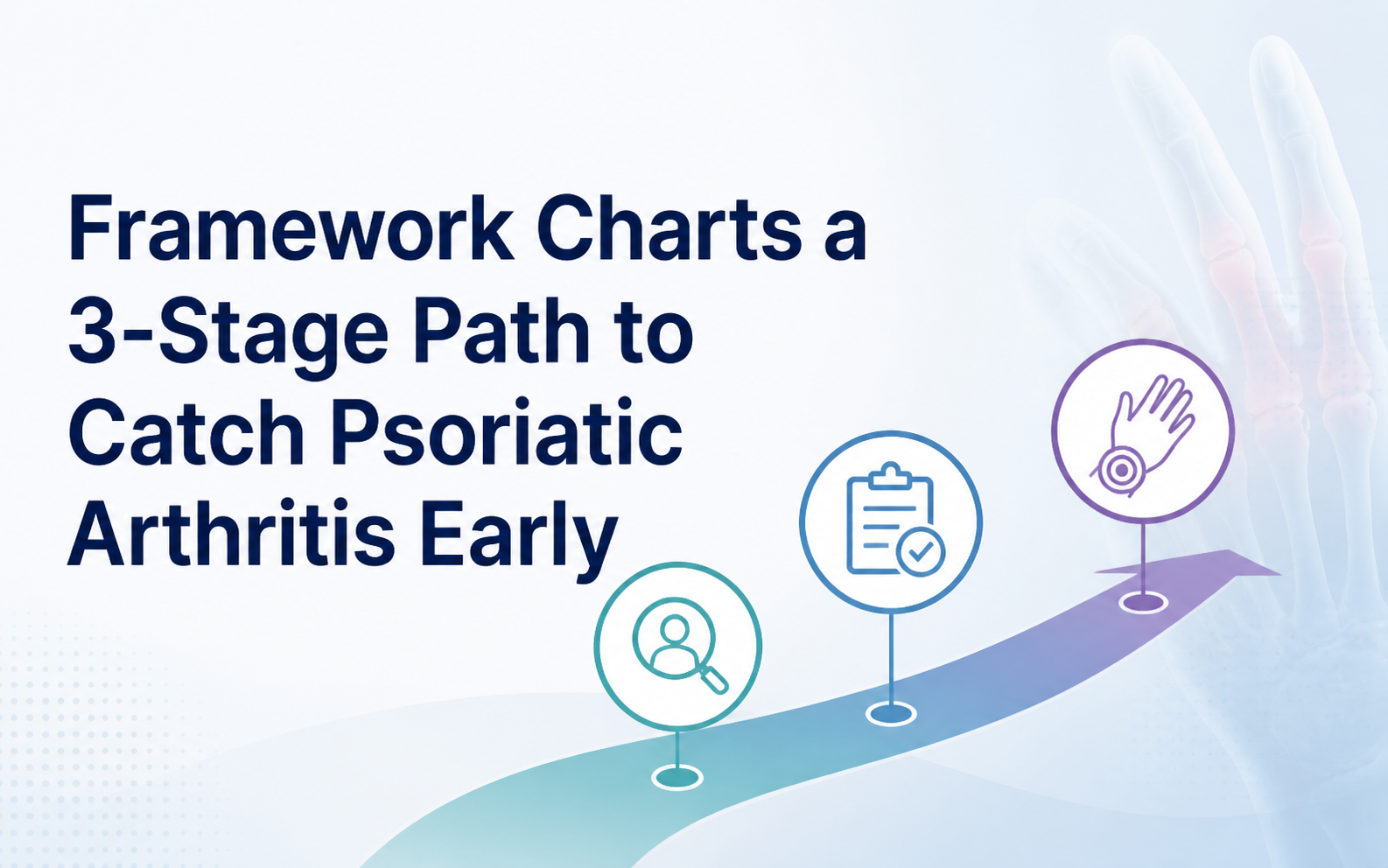
รีวิวนี้จัดวาง PsA เป็น “สายธารอาการ” ไม่ใช่เหตุการณ์เดี่ยว ระยะเสี่ยงเริ่มจากการกระตุ้นภูมิคุ้มกันทั่วร่างโดยยังไม่มีอาการกล้ามเนื้อ-กระดูก ระยะใต้คลินิกเริ่มมี arthralgia หรือหลักฐานอักเสบจากภาพถ่าย โดยยังไม่เข้าเกณฑ์ข้ออักเสบเต็มรูปแบบ และเมื่อมี synovitis/enthesitis/dactylitis จนเข้าเกณฑ์จัดจำแนก จึงเข้าสู่ระยะคลินิก ตัวทำนายระยะยาวรวมความรุนแรงของสะเก็ดเงิน เล็บผิดปกติ ประวัติครอบครัว และโรคอ้วน ขณะอาการปวดข้อกับภาพถ่ายที่บ่งชี้ enthesitis/synovitis เป็นสัญญาณว่าใกล้เปลี่ยนผ่าน
เทคโนโลยีภาพถ่าย Ultrasonography และ MRI ตรวจพบการอักเสบใต้คลินิกในผู้ป่วยที่ยังไม่มีอาการข้อได้ ส่วน PET tracer ที่ชี้การทำงานของไฟโบรบลาสต์ให้สัญญาณผิดปกติที่เยื่อบุข้อและจุดยึดเอ็นได้ก่อนภาพอัลตราซาวด์อีกขั้น เครื่องหมายพันธุกรรมเสริมชั้นความเสี่ยง: HLA-B27 เชื่อมกับโรคแกนกลางลำตัว/จุดยึดเอ็น HLA-B38 และ HLA-C*06 เชื่อมกับข้อส่วนปลาย และงานจีโนมระบุยีนในแกน IL‑23/IL‑17 ที่ขับโรคสะเก็ดเงินเองด้วย
แบบคัดกรองที่ผ่านการตรวจสอบความถูกต้อง 5 ชนิด รวมถึง PEST, ToPAS‑2 และ EARP ช่วยคัดกรองเพื่อส่งต่อรูมาติส EARP รายงานว่าความแม่นยำโดยรวมสูงสุด ส่วน ToPAS‑2 เหมาะกับโรคระยะต้นหลายตำแหน่ง ทั้งนี้ dactylitis พบประมาณ 10% ในกลุ่มใต้คลินิกและมักเป็นสัญญาณเข้าสู่ PsA ชัดเจน
สัญญาณจากข้อมูลสังเกตการณ์ยังชี้ว่า “รักษาโรคสะเก็ดเงินให้เร็วและต่อเนื่อง” อาจลดความเสี่ยงเกิด PsA ได้ กลุ่มที่รับยาชีวภาพต่อเนื่องมีความเสี่ยงเกิด PsA ต่ำกว่า UVB ชัดเจน (HR 0.27) การวิเคราะห์ระยะยาวแบบจับคู่แนวโน้มพบการปกป้องยืนระยะจากยากลุ่มยับยั้ง TNF (HR 0.32) อย่างไรก็ดี หลักฐานการป้องกันขั้นเด็ดขาดจากการทดลองแบบสุ่มยังรออยู่
สาระเชิงปฏิบัติสำหรับทีมแพทย์คือ ผู้มีฟีโนไทป์เสี่ยงสูง เช่น เล็บหรือหนังศีรษะมีโรค หรือมีประวัติครอบครัว ควรได้รับการคัดกรองเป็นระยะ และให้ทีมผิวหนังเป็นแกนนำจัดชั้นความเสี่ยง ผนวกการถ่ายภาพเป้าหมายเพื่อส่งต่อเร็วขึ้น—ใช้หน้าต่างเวลา “ก่อนข้อพัง” ให้คุ้มค่า สำหรับผู้อ่านสายเทคโนโลยี จุดแข็งคือเครื่องมือที่เข้าถึงง่าย เช่น PEST 5 คำถาม และอัลกอริทึมการส่งต่อบนฐานภาพถ่าย/ชีวพันธุกรรม ซึ่งช่วยลดข้อจำกัดด้านการเข้าถึงองค์ความรู้เชิงปฏิบัติให้ทั้งแพทย์และผู้ป่วย
บทสรุป: มหาวิทยาลัยศรีปทุมเผยแพร่องค์ความรู้เชิงหลักฐานเพื่อให้ทีมคลินิกและผู้ป่วยเห็นสัญญาณล่วงหน้า ดำเนินการคัดกรองเป็นระบบ และเชื่อมต่อการรักษาให้เร็วขึ้น—ก้าวสำคัญเพื่อลดความเสียหายถาวรของข้อต่อที่ป้องกันได้
Structured review charts the psoriasis-to-PsA continuum and highlights validated questionnaires, imaging, and genetics to fast‑track timely referrals
Psoriatic arthritis (PsA) doesn’t usually appear out of nowhere. In up to 20%–30% of people with psoriasis, it evolves after a clinically silent period of immune activation that routine care rarely screens—until joint damage begins. A structured literature review in Clinical and Experimental Rheumatology (2026) maps this three‑stage journey—at‑risk, subclinical, and clinical—and assembles practical tools clinicians can use to intercept earlier and refer to rheumatology on time.
A persistent gap is under‑screening in dermatology settings. The National Psoriasis Foundation recommends the 5‑question Psoriasis Epidemiology Screening Tool (PEST) every six months; in cited data, 41% of PEST‑positive patients had not been previously diagnosed with PsA, underscoring how easily disease is missed between visits.
Framed as a continuum, PsA starts with systemic immune activation without musculoskeletal symptoms, progresses to subclinical arthralgia or imaging‑detected inflammation, and reaches clinical PsA once synovitis, enthesitis, or dactylitis meets classification criteria. Long‑term risk is linked to more severe psoriasis, nail disease, family history, and obesity, while arthralgia and imaging‑detected enthesitis/synovitis signal imminent transition.
Technology enables earlier flags: ultrasonography and MRI reveal subclinical inflammation in asymptomatic patients, and emerging fibroblast‑activation PET imaging can light up synovial and entheseal sites even before ultrasound changes. Genetics add precision: HLA‑B27 aligns with axial/enthesial disease, HLA‑B38 and HLA‑C*06 with peripheral joints, and genome‑wide studies implicate IL‑23/IL‑17 pathway genes.
Five validated questionnaires—including PEST, ToPAS‑2, and EARP—aid triage, with EARP reported as most accurate overall and ToPAS‑2 suited to early multisite disease. Dactylitis, though uncommon preclinically, appeared in ~10% and often marked transition to overt PsA.
Observational cohorts suggest treating skin disease early and continuously may blunt PsA onset: continuous biologic therapy associated with markedly lower incident PsA versus UVB (HR 0.27), with decade‑long protection seen for TNF inhibitors (HR 0.32). Still, definitive prevention trials are pending, and no single biomarker/imaging threshold yet predicts progression with certainty.
For clinicians and patients, the practical takeaway is clear: periodically screen high‑risk psoriasis phenotypes (nail/scalp involvement, family history), deploy dermatology‑led risk stratification with targeted musculoskeletal imaging, and refer early. For a tech‑savvy audience, the value lies in simple tools (a 5‑item PEST) paired with imaging/genetic‑informed algorithms—making evidence actionable and lowering the knowledge barrier to early interception.
Sripatum University shares this evidence‑based brief to support timely screening, smarter referrals, and ultimately fewer preventable joint injuries.
SDG 3: Good Health and Well-being
ที่มา: https://www.ajmc.com/view/framework-charts-3-stage-path-catch-psoriatic-arthritis