SPU เดินหน้าลดข้อจำกัดการเข้าถึงการเรียนรู้ด้าน AI ด้วย SIT UPDATE — ถอดสัญญาณ Gemini 4 Argon คิดงานยาวขึ้น โค้ดเก่งขึ้น ช่วยงานองค์กร และเด่นด้าน Cybersecurity
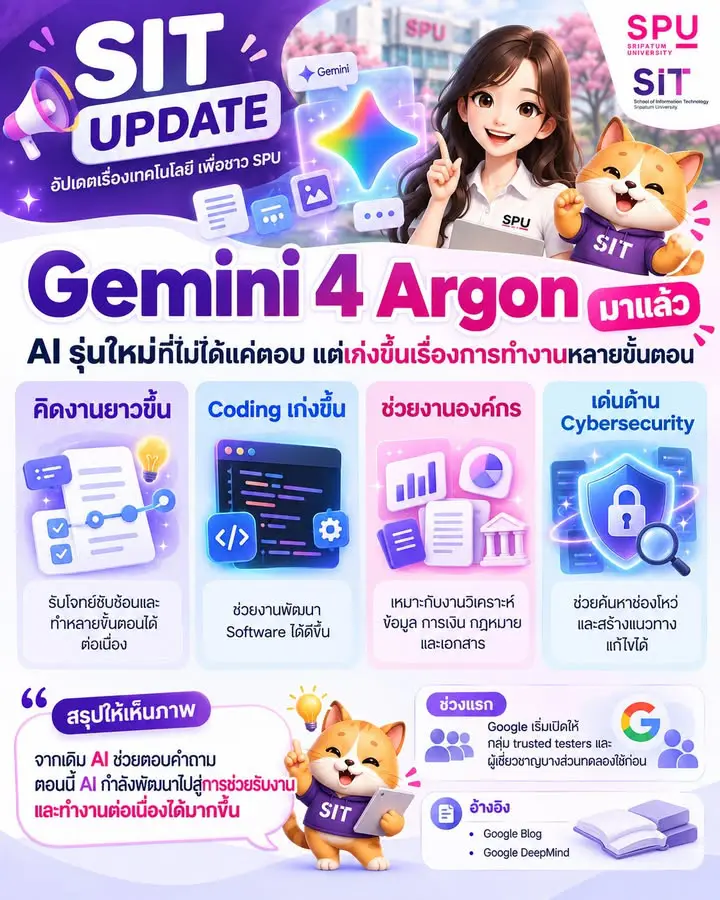
โลกไอทีกำลังขยับครั้งใหญ่ เมื่อ Gemini 4 Argon เปิดตัวในฐานะ AI ที่ไม่ได้เก่งแค่ “ตอบคำถาม” แต่พัฒนาสู่การทำงานหลายขั้นตอนอย่างต่อเนื่อง ทีม School of Information Technology (SIT) มหาวิทยาลัยศรีปทุม จึงจัดทำ “SIT UPDATE” เพื่อชาว SPU สรุปสาระสำคัญให้เข้าใจง่ายและนำไปใช้ได้จริง ช่วยให้ นักศึกษา และคนทำงานสายเทคโนโลยีตามทันความเปลี่ยนแปลง
ประเด็นอัปเดตสำคัญ
– คิดงานยาวขึ้น: รับโจทย์ซับซ้อน ดำเนินงานหลายขั้นตอนต่อเนื่อง เหมาะกับเวิร์กโฟลว์ที่ต้องวางแผนและติดตามผล
– Coding เก่งขึ้น: ช่วยพัฒนาและปรับปรุงซอฟต์แวร์ได้ดีขึ้น เหมาะกับงานเขียนโค้ด ทดสอบ และรีแฟกเตอร์
– ช่วยงานองค์กร: สนับสนุนงานวิเคราะห์ข้อมูล งานการเงิน กฎหมาย และเอกสาร เพื่อลดเวลางานรูทีน
– เด่นด้าน Cybersecurity: ช่วยค้นหาช่องโหว่และแนะนำแนวทางแก้ไข เพิ่มความพร้อมด้านความมั่นคงปลอดภัย
สัญญาณสำคัญคือบทบาทของ AI ที่ขยับจาก “ผู้ช่วยตอบ” ไปสู่ “ผู้ร่วมทำงานหลายขั้นตอน” ทำให้การออกแบบระบบ การพัฒนาซอฟต์แวร์ และการป้องกันภัยไซเบอร์ มีทางเลือกที่ยืดหยุ่นและทำซ้ำได้มากขึ้น สำหรับชาว SPU นี่คือโอกาสในการเรียนรู้วิธีออกแบบพรอมพ์และเวิร์กโฟลว์แบบเป็นขั้นตอน ทดลองใช้กับงานจริงอย่างมีความรับผิดชอบ และยกระดับทักษะการทำงานร่วมกับ AI
ช่วงแรก Google ระบุว่าเปิดให้กลุ่ม trusted testers และผู้ใช้องค์กรบางส่วนทดลองใช้งานก่อน และมีข้อมูลอ้างอิงจาก Google Blog และ Google DeepMind ซึ่ง SIT ได้นำมาคัดกรองและสรุปให้เข้าใจง่ายในรูปแบบ “SIT UPDATE” เพื่อลดช่องว่างการเข้าถึงความรู้ด้านเทคโนโลยีรุ่นใหม่ ให้ นักศึกษา อาจารย์ และบุคลากร SPU ใช้เป็นจุดเริ่มต้นในการเรียนรู้ต่อยอด
SIT จะเดินหน้าผลิตคอนเทนต์อัปเดตเชิงลึกต่อเนื่อง เพื่อให้ชุมชนเทคโนโลยีของ SPU พร้อมรับมือการเปลี่ยนแปลงอย่างรวดเร็ว และใช้ AI เพื่อสร้างคุณค่ากับงานจริงได้มากขึ้น
แหล่งข้อมูล: Google Blog, Google DeepMind
SPU lowers learning barriers with SIT UPDATE — decoding Gemini 4 Argon for longer reasoning, stronger coding, enterprise support, and cybersecurity gains
AI takes a substantial leap as Gemini 4 Argon arrives—not just answering questions but executing multi‑step workflows. To keep the SPU tech community ahead, the School of Information Technology (SIT) released an SIT UPDATE that distills the essentials into clear, actionable insights for students and professionals.
Key takeaways
– Longer reasoning: Handles complex, multi‑step tasks, fitting plan‑and‑track workflows.
– Better coding: Improves software development assistance—writing, testing, and refactoring.
– Enterprise support: Assists with data, finance, legal, and document analysis to reduce routine workload.
– Cybersecurity focus: Helps surface vulnerabilities and suggests remediations.
This marks a shift from “AI as a helper” to “AI as a multi‑step collaborator,” opening flexible, repeatable options for system design, software engineering, and cyber defense. For SPU learners, it is a timely chance to design structured prompts and workflows, experiment responsibly, and raise capability in working alongside AI.
According to Google, early access is available to trusted testers and select enterprise users. Sources include Google Blog and Google DeepMind. SIT curates these signals into an accessible SIT UPDATE, lowering knowledge barriers so SPU students, faculty, and staff can start learning and building with the latest AI advances.
SIT will continue delivering focused tech updates to help the SPU community stay current and turn AI into real workplace value.
Sources: Google Blog, Google DeepMind