
โครงการศึกษาดูงานต่างประเทศของนักศึกษารุ่นที่ 17
หลักสูตรบริหารธุรกิจดุษฎีบัณฑิต (DBA) ณ สาธารณรัฐประชาชนจีน
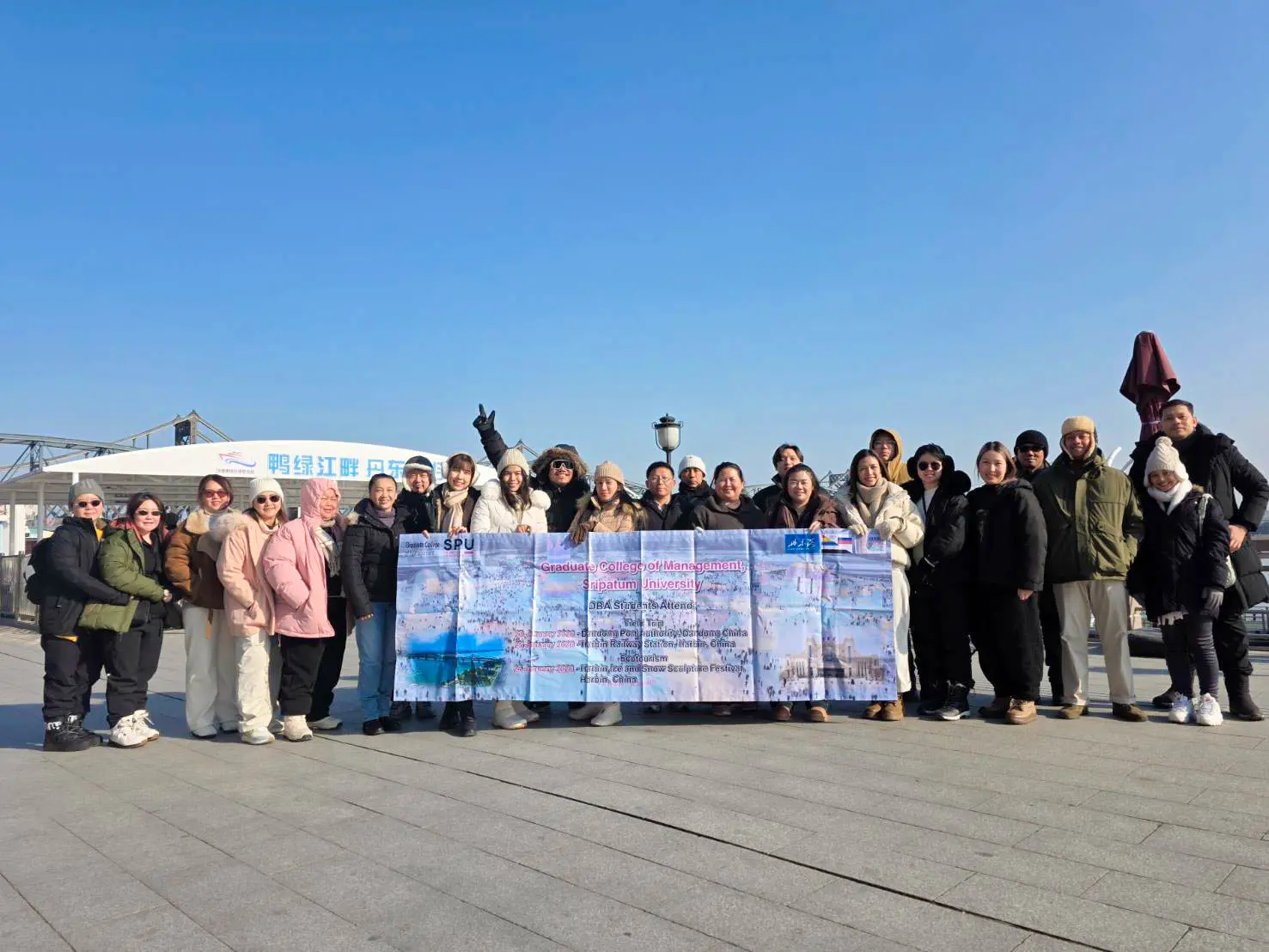
เมื่อวันที่ 22 มกราคม 2569 หลักสูตรบริหารธุรกิจดุษฎีบัณฑิต (Doctor of Business Administration: DBA) ได้นำนักศึกษารุ่นที่ 17 พร้อมด้วยคณาจารย์ เข้าร่วมโครงการศึกษาดูงาน ณ สาธารณรัฐประชาชนจีน
ภายใต้การดูแลและรับผิดชอบโดย ผู้ช่วยศาสตราจารย์ ดร.อังกูร ลาภธเนศ ผู้อำนวยการหลักสูตรบริหารธุรกิจดุษฎีบัณฑิต
ปัจจุบัน ระบบการขนส่งถือเป็นกลไกสำคัญในการพัฒนาระบบโลจิสติกส์ของภูมิภาคเอเชียตะวันออกเฉียงเหนือ โดยเฉพาะโครงสร้างพื้นฐานด้านระบบรางและการคมนาคมที่สอดคล้องกับยุทธศาสตร์ Belt and Road Initiative (BRI) ซึ่งมีบทบาทสำคัญในการยกระดับศักยภาพทางการค้าระหว่างประเทศ และสนับสนุนการเติบโตทางเศรษฐกิจทั้งในระดับภูมิภาคและระดับโลก
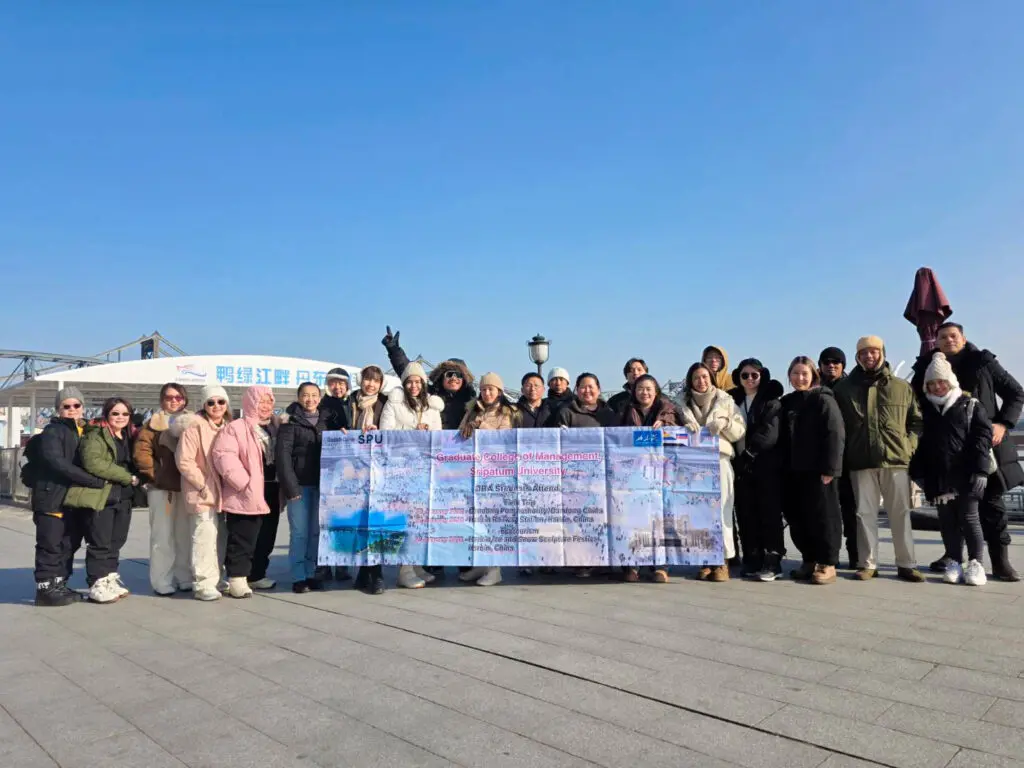
🔹 ท่าเรือตานตง (Dandong Port) เมืองตานตง มณฑลเหลียวหนิง
คณะผู้เข้าร่วมได้เข้าเยี่ยมชมและศึกษาระบบการดำเนินงานของท่าเรือเชิงยุทธศาสตร์ที่สำคัญของจีนในเขตชายแดน ใกล้แม่น้ำยาลู่ (Yalu River) พรมแดนจีน–เกาหลีเหนือ ซึ่งท่าเรือแห่งนี้มีบทบาทในการเชื่อมโยงเส้นทางขนส่งทั้งทางทะเลและทางบก เป็นศูนย์กลางนำเข้า–ส่งออกของภูมิภาคตะวันออกเฉียงเหนือ และเป็นประตูสำคัญสู่ตลาดเอเชีย–แปซิฟิกและตลาดโลก
🔹 Harbin Railway Logistics Center มณฑลเฮยหลงเจียง
ศูนย์กลางการกระจายสินค้าหลักของเส้นทางรถไฟสายจีน–รัสเซีย และจุดเชื่อมต่อสำคัญของขบวนรถไฟ China–Europe Railway Express (Northern Route) รองรับการขนส่งสินค้าปริมาณมากจากจีนสู่รัสเซีย ยุโรปตะวันออก และยุโรปกลางอย่างมีประสิทธิภาพ มีโครงสร้างพื้นฐานที่ครบวงจรสะท้อนการพัฒนาระบบโลจิสติกส์สมัยใหม่ และการยกระดับประสิทธิภาพห่วงโซ่อุปทานในระดับนานาชาติ
การศึกษาดูงานครั้งนี้เป็นการบูรณาการองค์ความรู้ทางทฤษฎีสู่การเรียนรู้จากประสบการณ์จริง (Experiential Learning) เปิดมุมมองเชิงยุทธศาสตร์ และเสริมความเข้าใจบทบาทโครงสร้างพื้นฐานด้านการขนส่งต่อการขับเคลื่อนเศรษฐกิจโลก อันเป็นก้าวสำคัญในการพัฒนาศักยภาพผู้นำธุรกิจระดับดุษฎีบัณฑิต ให้สามารถเชื่อมโยงองค์ความรู้สู่การประยุกต์ใช้จริงในบริบทโลจิสติกส์ระดับภูมิภาคและนานาชาติได้อย่างมีประสิทธิภาพ สะท้อนพันธกิจและวิสัยทัศน์ของมหาวิทยาลัยในการสร้างมืออาชีพคุณภาพ ด้วยมาตรฐานสากล นวัตกรรม และเครือข่ายความร่วมมือระดับโลก เพื่อร่วมขับเคลื่อนเศรษฐกิจและสังคมอย่างยั่งยืน
เพื่อสะท้อนบทบาทของมหาวิทยาลัยในการขับเคลื่อนความยั่งยืน
โครงการศึกษาดูงานครั้งนี้สามารถเชื่อมโยงกับ SDGs ในประเด็นสำคัญดังนี้:
SDG 4: คุณภาพการศึกษา (Quality Education)
Target 4.4 เพิ่มจำนวนเยาวชนและผู้ใหญ่ที่มีทักษะที่จำเป็นสำหรับการจ้างงาน งานที่มีคุณค่า และการเป็นผู้ประกอบการ
การพัฒนาทักษะเชิงยุทธศาสตร์ด้านโลจิสติกส์ การค้าระหว่างประเทศ และโครงสร้างพื้นฐานระดับนานาชาติ ผ่านการเรียนรู้จากสถานการณ์จริง ซึ่งช่วยเสริมสมรรถนะผู้นำธุรกิจระดับดุษฎีบัณฑิตให้มีความพร้อมต่อการแข่งขันในเวทีโลก
SDG 8: Decent Work and Economic Growth – การจ้างงานที่มีคุณค่าและการเติบโตทางเศรษฐกิจ
Target 8.2 ยกระดับผลิตภาพทางเศรษฐกิจผ่านการกระจายความรู้ เทคโนโลยี และนวัตกรรม
การศึกษาโครงสร้างพื้นฐานโลจิสติกส์สมัยใหม่และระบบรางระหว่างประเทศ ซึ่งเป็นกลไกสำคัญในการเพิ่มประสิทธิภาพห่วงโซ่อุปทาน และส่งเสริมการเติบโตทางเศรษฐกิจทั้งในระดับภูมิภาคและระดับโลก
SDG 9: Industry, Innovation and Infrastructure – อุตสาหกรรม นวัตกรรม และโครงสร้างพื้นฐาน
Target 9.1 พัฒนาโครงสร้างพื้นฐานที่มีคุณภาพ เชื่อถือได้ และยั่งยืน เพื่อสนับสนุนการพัฒนาเศรษฐกิจ
การเรียนรู้บทบาทของท่าเรือและระบบรางในฐานะโครงสร้างพื้นฐานเชิงยุทธศาสตร์ ซึ่งเป็นหัวใจของการเชื่อมโยงการค้าและความร่วมมือทางเศรษฐกิจระหว่างประเทศ
SDG 17: Partnerships for the Goals – ความร่วมมือเพื่อการพัฒนาที่ยั่งยืน
Target 17.16 และ 17.17 ส่งเสริมความร่วมมือระดับโลกและความร่วมมือระหว่างภาคส่วน
โครงการศึกษาดูงานต่างประเทศสะท้อนการสร้างเครือข่ายความร่วมมือทางวิชาการและธุรกิจในระดับนานาชาติ เสริมสร้างความเข้าใจข้ามพรมแดน และพัฒนาความร่วมมือเพื่อการเติบโตอย่างยั่งยืน
International Study Visit Program of the 17th Cohort
Doctor of Business Administration (DBA) People’s Republic of China
On January 22, 2026, the Doctor of Business Administration (DBA) Program led the 17th cohort of doctoral candidates, accompanied by faculty members, on an international study visit to the People’s Republic of China.
The program was conducted under the supervision and academic leadership of
Assistant Professor Dr. Angkoon Lapthanet
Program Director, Doctor of Business Administration.
At present, transportation systems serve as a critical mechanism in advancing logistics development across Northeast Asia. In particular, rail infrastructure and integrated transportation networks aligned with the Belt and Road Initiative (BRI) play a pivotal role in enhancing international trade capacity and fostering economic growth at both regional and global levels.
Dandong Port
Dandong City, Liaoning Province
The delegation visited and examined the operational systems of one of China’s key strategic border ports located near the Yalu River along the China–North Korea border. Dandong Port functions as a vital multimodal transportation hub, integrating maritime and land routes. It serves as a major import–export gateway for Northeast China and acts as a significant access point to the Asia-Pacific region and global markets.
Harbin Railway Logistics Center
Heilongjiang Province
The delegation also visited the Harbin Railway Logistics Center, a principal distribution hub along the China–Russia railway corridor and a critical node of the China–Europe Railway Express (Northern Route). The center facilitates large-scale cargo transportation from China to Russia, Eastern Europe, and Central Europe with high efficiency. Its comprehensive infrastructure reflects the advancement of modern logistics systems and the strengthening of international supply chain performance.
This international study visit integrated theoretical knowledge with experiential learning, broadening participants’ strategic perspectives and deepening their understanding of the role of transportation infrastructure in driving the global economy. The program represents a significant step in enhancing the leadership capabilities of doctoral-level business professionals, enabling them to translate academic knowledge into practical application within regional and international logistics contexts.
The initiative also reflects the University’s mission and vision to develop high-quality professionals through international standards, innovation, and global partnerships, contributing to sustainable economic and societal development.
Alignment with Sustainable Development Goals (SDGs)
SDG 4: Quality Education
Target 4.4
Substantially increase the number of youth and adults who have relevant skills for employment, decent jobs, and entrepreneurship.
This initiative aligns with Target 4.4 by strengthening strategic competencies in logistics, international trade, and global infrastructure systems. Through experiential learning in real-world operational contexts, the program enhances the capabilities of doctoral-level business leaders, equipping them with advanced analytical, strategic, and managerial skills necessary to compete effectively in the global arena.
SDG 8: Decent Work and Economic Growth
Target 8.2
Achieve higher levels of economic productivity through diversification, technological upgrading, and innovation.
The study visit contributes to Target 8.2 by providing in-depth exposure to modern logistics infrastructure and international railway systems. These mechanisms play a critical role in enhancing supply chain efficiency and facilitating cross-border trade. By understanding such systems, participants gain insights into how innovation and infrastructure development drive sustainable economic growth at both regional and global levels.
SDG 9: Industry, Innovation and Infrastructure
Target 9.1
Develop quality, reliable, sustainable, and resilient infrastructure to support economic development and human well-being.
The program reflects Target 9.1 through the examination of strategic ports and international rail networks as core economic infrastructure. These systems serve as vital connectors of global trade and international cooperation. The study visit deepens participants’ understanding of how resilient and integrated infrastructure underpins industrial development and long-term economic sustainability.
SDG 17: Partnerships for the Goals
Targets 17.16 and 17.17
Enhance global partnerships for sustainable development and encourage effective public, public-private, and civil society partnerships.
The international study visit demonstrates the University’s commitment to fostering global academic and business networks. By promoting cross-border engagement, knowledge exchange, and institutional collaboration, the initiative strengthens international partnerships and contributes to sustainable growth through multi-sectoral cooperation.