
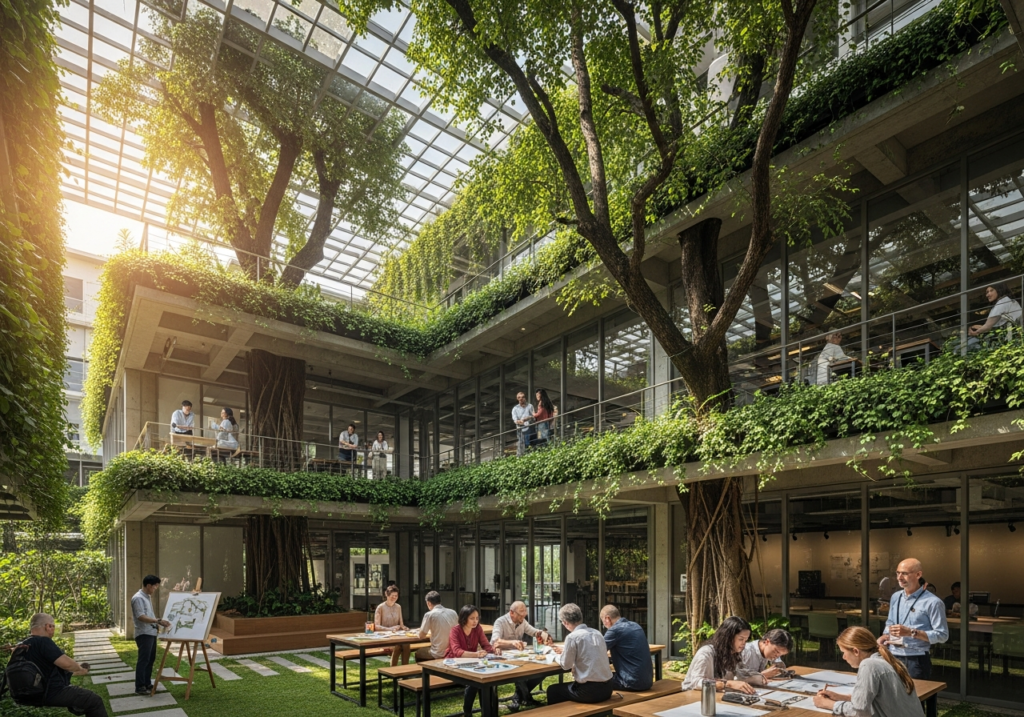
“Trees” in Architecture: A Perspective Beyond Beauty
When talking about “trees” in architectural design, many might only think of them as aesthetic elements or decorations. However, from the perspective of modern designers—especially at the School of Design and Architecture, Sripatum University (SPU)—we see trees as a vital component that seamlessly integrates life and innovation into buildings. This article will explore the deeper dimensions of green spaces in architectural work.
Table of Contents
Why are ‘trees’ more important than just beauty?
Incorporating trees into a building isn’t just beneficial for its image; it also has positive effects across several dimensions that architects and designers must consider:
- Environmental: Helps reduce the temperature around the building (Heat Island Effect), provides shade, purifies the air, and increases air humidity.
- Biophilic Design, or connecting with nature, helps reduce stress, boosts creativity, and promotes good mental health.
- Economic: Helps save energy on air conditioning and can even increase real estate value.
- Functional: Creates recreational spaces, acts as a natural room divider, and creates a memorable identity for the project.
Teaching Concepts at the SPU School of Design and Architecture
At Sripatum University (SPU), we instill in our students the understanding that good architecture comes with sustainability. Our teaching, therefore, focuses on integrating various fields of knowledge, including:
- Sustainable Design: Design that considers long-term environmental impacts.
- Landscape Architecture: Harmoniously integrating landscape architecture with building design.
- Material Innovation: Selecting appropriate materials and green innovations for creative work.
Examples of Integrating Green Spaces into Design
Students from the School of Design and Architecture learn through hands-on practice with challenging assignments, such as designing Green Roofs, Vertical Gardens, Pocket Parks, or creating a Courtyard as the heart of a home. All of this is part of the Architecture program at SPU, which aims to develop a new generation of architects who truly understand nature.
Frequently Asked Questions (FAQ)
Q: How important is Biophilic Design in modern architecture?
A: It is a very important concept because it addresses the lifestyle of urban dwellers who are distanced from nature. Bringing natural elements into buildings helps restore both body and mind, making users happier and more productive.
Q: Will I learn about this directly at the SPU School of Design and Architecture?
A: Absolutely. Concepts of green architecture and sustainability are woven into many courses, from basic design to specialized subjects in building technology and landscape architecture, ensuring students have a comprehensive perspective.
Q: What are the precautions when using trees in buildings?
A: There are several considerations, such as choosing plant species suitable for light and weather conditions, designing effective irrigation and drainage systems, preventing root damage to the structure, and long-term maintenance. These are things architects must plan carefully.
………………………………………….
“Learn from Professionals, Gain Real Experience”
The #1 private university meeting the lifestyle of the new generation
Be #1 in your own way today at SPU
>> Apply Online Click here <<