
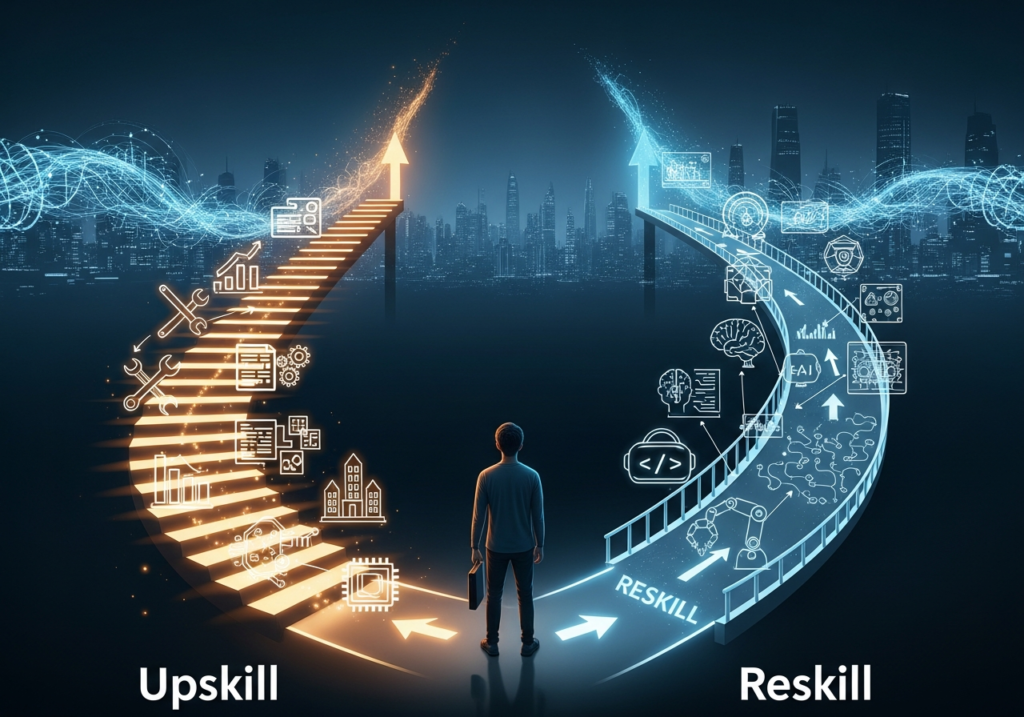
Reskill & Upskill: The Solution or Survival for New Graduates in the Job Market
In an era where technology and AI are rapidly driving the world, a degree may no longer be the only ticket to success. Competition in the labor market is increasing every day, so new graduates need to have a “secret weapon” to stand out. That weapon is lifelong learning through Reskilling & Upskilling.
Table of Contents
What are Reskill & Upskill? How are they different?
Although they sound similar, these two terms have distinct meanings and are key strategies for self-development.
- Reskill (Learning new skills): Learning an entirely new set of skills to change career paths or work in a completely different position.
Example: An accountant learning programming to become a software developer. - Upskill (Building on existing skills): Developing existing skills to be deeper, more expert, and more up-to-date to increase efficiency in the same career path.
Example: A digital marketer learning advanced SEO techniques or using AI tools to analyze customer data.
Why are Reskilling & Upskilling important for new graduates?
Investing time in Reskilling & Upskilling isn’t just an option; it’s a “survival strategy” that will help you move forward steadily in the modern job market because:
- Create a standout profile: It makes you different from other applicants with the same educational background.
- Adapt to the world: Be ready to handle new technologies and ever-changing market demands.
- Open doors to new opportunities: Diverse skills allow you to choose a wider range of career paths.
- Increase value and bargaining power: Those with in-demand skills naturally have the chance to earn higher rewards.
How to start Reskilling & Upskilling?
Getting started isn’t hard; you just need to plan well. Try following these steps:
- Self-exploration: Find what you’re interested in, your aptitudes, and your career goals.
- Study market demand: Look for which skills are in demand in the industry you’re interested in (see more info in The Future of Jobs Report).
- Choose learning channels: There are many online courses available today, such as Coursera, SkillLane, or various workshops.
- Take action and create work: Apply the knowledge you’ve learned in practice. Create projects or a portfolio to use for job applications. If you need more ideas, try reading Guidelines for Planning a Career Path in the Digital Age.
Frequently Asked Questions (FAQ)
Reskill is “learning anew” to change career paths, while Upskill is “building on the old” to become better in your current field.
Q2: Which skills should I start Reskilling or Upskilling?
High-demand skills include Digital Literacy, Data Analytics, Digital Marketing, and Artificial Intelligence (AI), along with soft skills such as critical thinking, communication, and collaboration.
Q3: Can I Reskill if I have no background in the new skill at all?
Of course! Most online learning resources today offer beginner courses that teach from the ground up. As long as you have the intention and discipline to learn, you can always start new skills.
………………………………………….
“Learn from Professionals, Gain Real Experience”
The #1 private university meeting the lifestyle of the new generation
Be #1 in your own way today at SPU
>> Apply Online Click here <<