
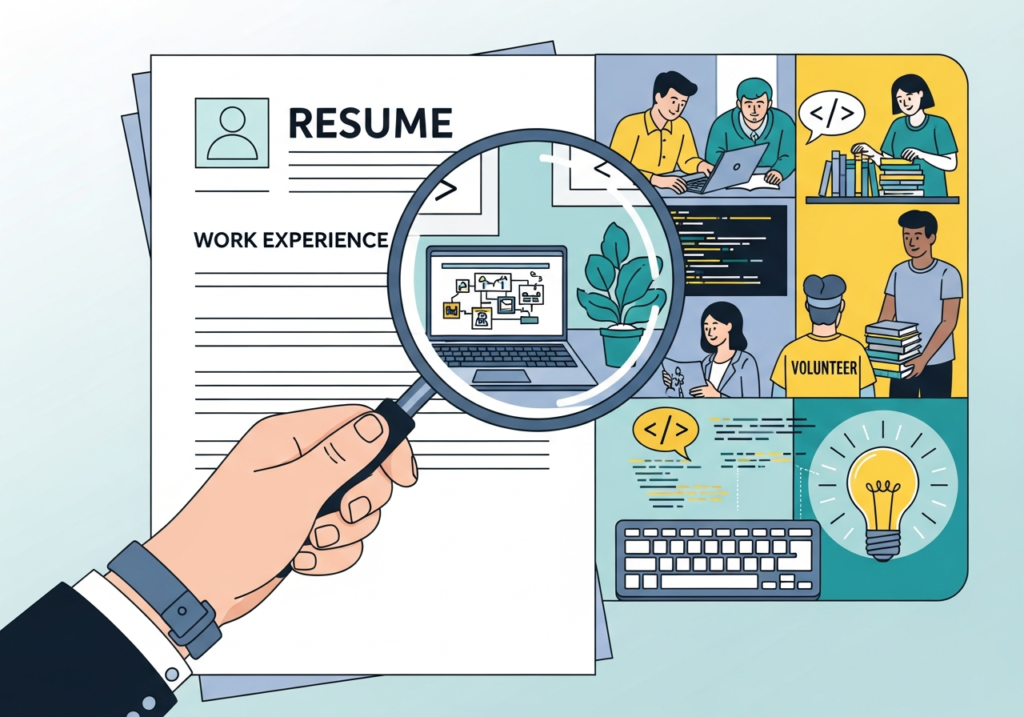
Decoding the “Experience” HR Looks for in Fresh Graduates, Even with an Empty Profile
Worried? When the “Work Experience” section of your resume is still empty, but companies want experienced people—don’t worry! This article will decode what’s actually called “fresh graduate experience” that HR is really looking for, and it’s more than you think.
Table of Contents
“Experience” isn’t just found in the office: What is HR looking for?
For fresh graduates, HR understands that you might not have full-time work experience yet. Instead, they look for “potential” and “transferable skills” from various activities you’ve done. These are another form of “experience.”
- ✔
University Activities: Whether it’s group projects, club work, student leadership, or even organizing small events, these all demonstrate teamwork, responsibility, and management skills. - ✔
Internships and Part-time Jobs: Even if they were short-term, they are a goldmine showing you’ve already touched the real world of work. - ✔
Hard Skills: Proficiency in various software, a third language, coding, or other self-taught skills. these are key advantages that make you stand out. - ✔
Volunteer Work and Personal Projects: These show enthusiasm, public-mindedness, and the ability to take initiative on your own.
Showcasing Your Best: How to present fresh graduate experience to catch an HR’s eye
Having these hidden experiences isn’t enough; you need to present them in an interesting way. Let’s see how to do it.
- ✔
Tailor your resume to tell a story: Instead of just writing “did a marketing project,” change it to “responsible for competitor data analysis in a group project, resulting in the team receiving the highest score in class.” Turning these activities into interesting fresh graduate experience is the key. (Read more resume writing techniques) - ✔
Create a Portfolio (if applicable): If you’re in design, marketing, or writing, a portfolio is a powerful tool to showcase your work and skills. - ✔
Use online platforms to your advantage: Update your profile on platforms like LinkedIn to look professional. Include information about your activities and skills.
Frequently Asked Questions (FAQ)
Q1: What should I do if I don’t have any standout activities?
Don’t worry. Focus on the skills gained from classroom learning, such as analysis, research, or projects done in class. Also, show as much enthusiasm and readiness to learn new things as possible during the interview.
Q2: Should I include my GPA on my resume?
If your GPA is relatively high (e.g., 3.00 or above), you should include it to build interest. If it’s not very high, you might choose to leave it out and focus on presenting other skills and experiences instead.
Q3: Are Soft Skills really more important than Hard Skills for fresh graduates?
Both are very important! Hard skills get the job done, but soft skills (such as communication, adaptability, and problem-solving) allow you to work well with others and grow within the organization. For fresh graduates, HR often places special emphasis on soft skills because they indicate potential for future development. This is a very valuable type of fresh graduate experience.
………………………………………….
“Learn from Professionals, Gain Real Experience”
The #1 private university meeting the lifestyle of the new generation
Be #1 in your own way today at SPU
>> Apply Online Click here <<