One page, one year, every SDG 12 measure. This is SPU’s public account of how it sources fairly, cuts plastic and single-use items, tracks what it throws away, and helps communities see waste as a resource.
Reporting period: 1 August 2025 – 31 July 2026
 Sripatum University (SPU) reports its progress on SDG 12 openly every year. A university feeds thousands of people, runs hundreds of rooms and buys from many suppliers, so its choices about consumption leave a real footprint. This report covers the 2025/26 academic year. It follows the areas Times Higher Education measures under SDG 12: operational policies, waste tracking and recycling, and public sustainability reporting.
Under the Alpha Ready Roadmap, the Office of Building and Facilities leads this work together with faculties, the SPU Chonburi campus and student units. The shared aim is to make responsible consumption part of everyday campus life.
Buying fairly and responsibly
- One policy for sourcing and waste: The SPU Announcement on Sustainable Resource Procurement and Waste Management (9 September 2023) applies to the whole university. It covers ethical sourcing of food and materials, hazardous waste, measurement of landfill and recycled waste, plastic reduction and single-use items. The policy is public and is reviewed each year through SPU’s quality assurance cycle.
- Food served fairly and safely: Campus food vendors work in licensed premises under university rules. They receive hygiene training and health checks, and they are encouraged to use local ingredients and sort their waste.
- Integrity in every purchase: The SPU Code of Ethics Regulation B.E. 2569 (31 July 2026) asks executives and staff to use university assets cost-effectively and to avoid actions with significant environmental harm.
Waste that is handled safely and measured
- Hazardous waste: Chemical, electronic and laboratory waste is separated at source, stored in labelled containers and sent to certified disposal centres. Staff and students receive safe-handling training.
- Every stream counted: Waste is sorted into recyclable, organic, hazardous and general streams. The SPU Waste Bank weighs recyclables batch by batch against recycling receipts, and canteen food waste and landfill-bound waste are also logged. Monthly records build the annual picture that guides decisions on what to divert next.
- New habits for new students: The ECOLIFE in U campaign launched at Freshy Day (9 July 2026) to bring sorting and low-waste living to first-year students.
Less plastic, fewer disposables, and partners who follow the same rules
- Bring your own bag: The University Book Center keeps plastic-bag-free days and encourages cloth bags.
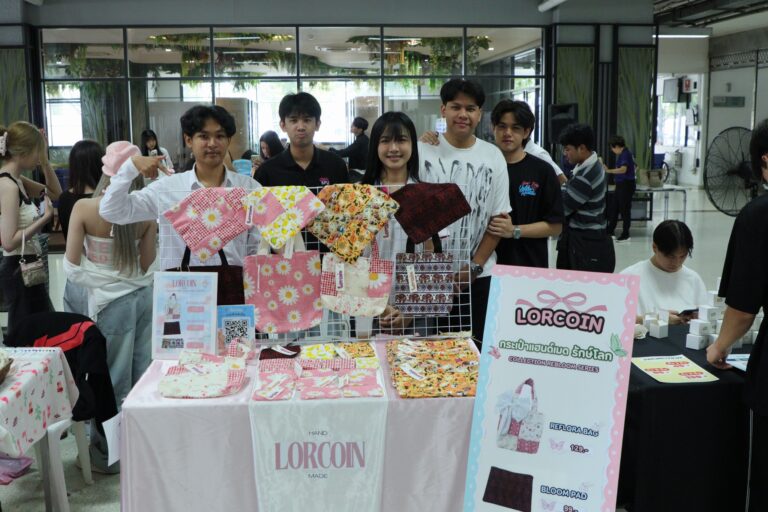
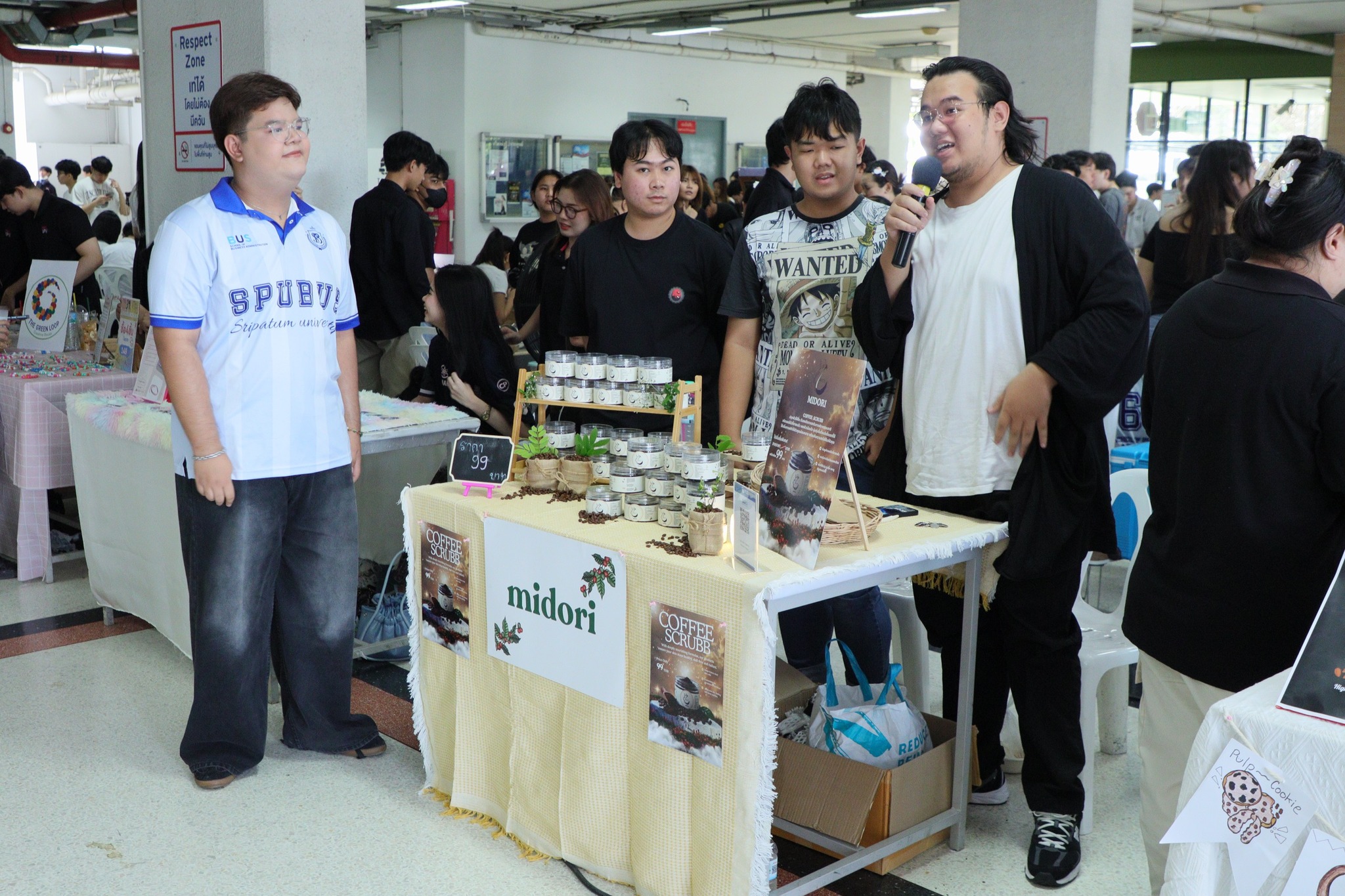
- Green business on campus: At the 13th SPUBUS Market Fair, themed “Green Business” (6 November 2025), student vendors sold food in biodegradable packaging and products made from recycled materials.
- Rules beyond the payroll: Food vendors, cleaning teams and contractors are expected to cut single-use items and sort waste. Building works by external contractors in 2025/26, including air-conditioning and lift upgrades, followed SPU’s Energy Conservation and Environment Policy (No. 100/2565). That policy requires energy-efficient, low-carbon materials.
Turning waste into value with communities
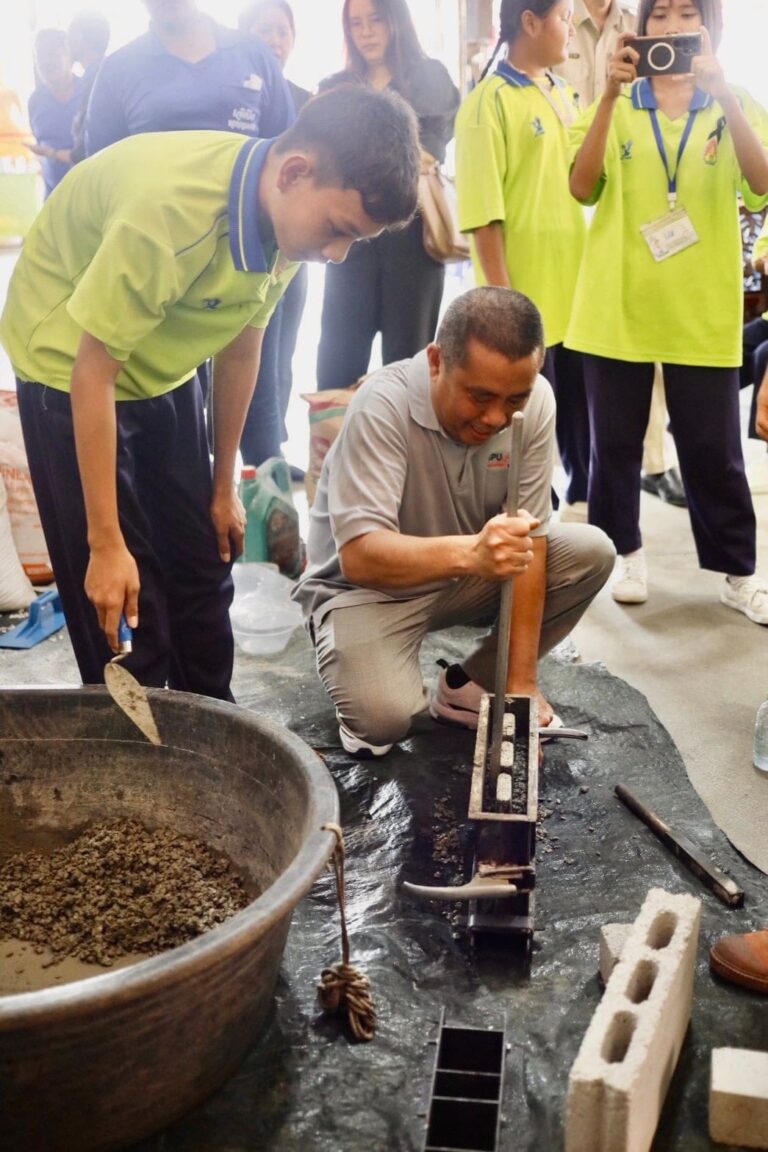
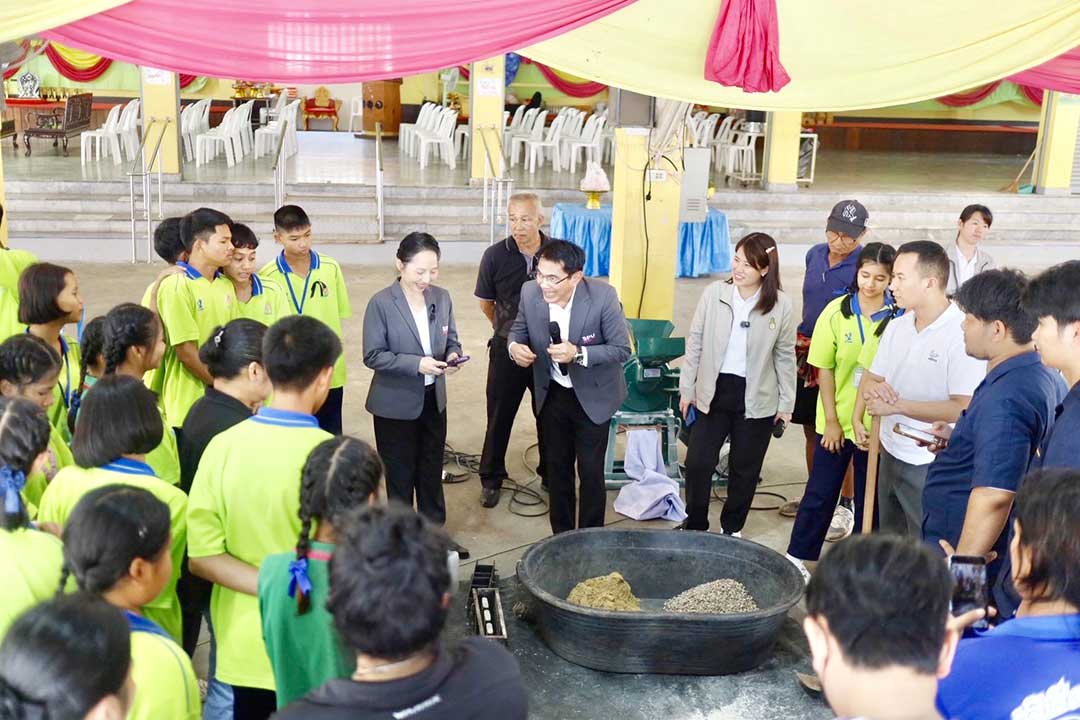
- Mussel shells into building blocks: In February 2026, the Faculty of Engineering met Samut Songkhram provincial authorities to plan reuse of mussel-shell waste. Four days later, the faculty ran a hands-on workshop that turned shells into building blocks with local residents and partner agencies.
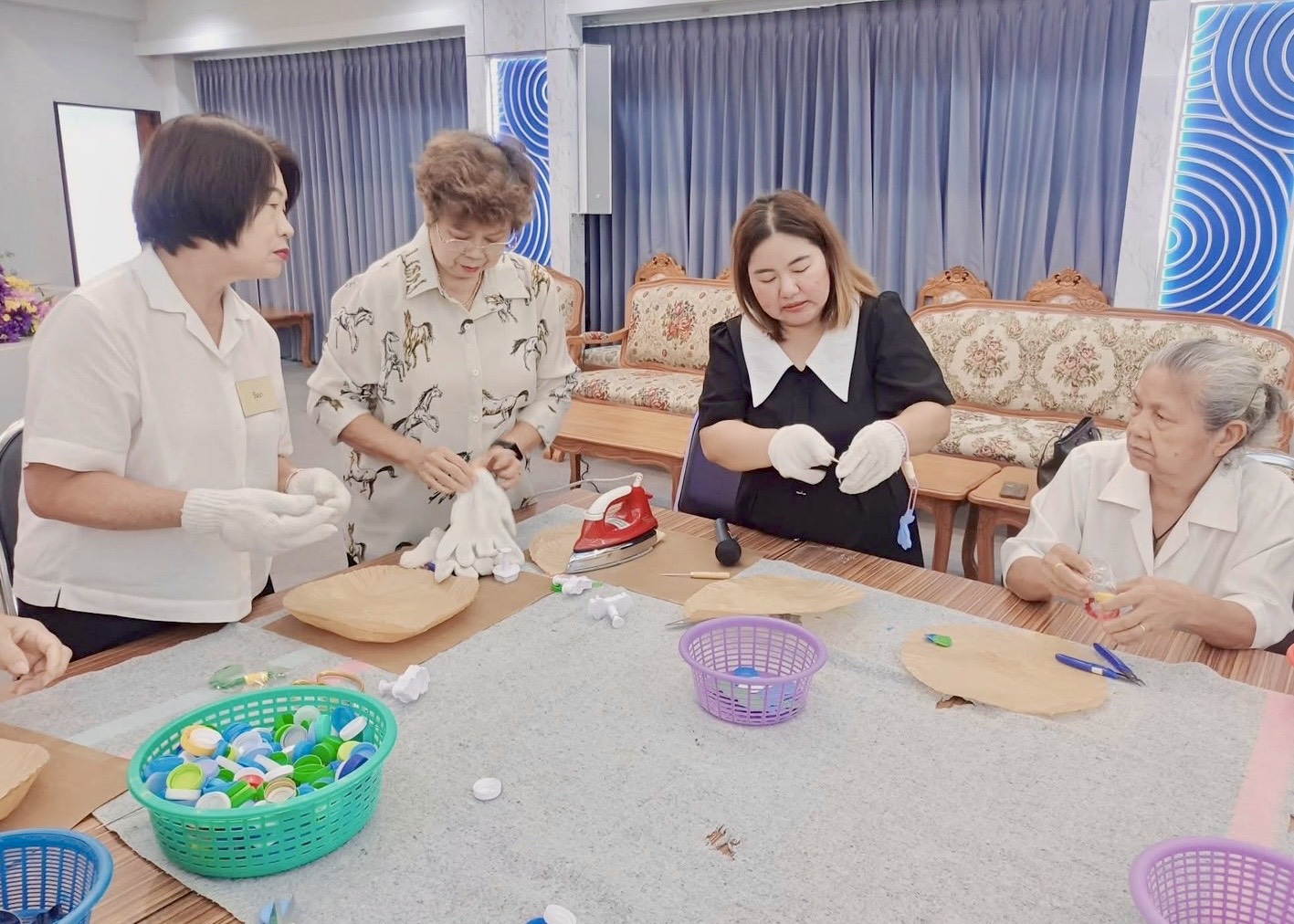
- Bottle caps into income: SPU Chonburi taught upcycling of plastic bottle caps into eco keychains. Older learners at the Chonburi City Municipality elderly school joined in June 2026, and youth and women in Khlong Tamru joined a vocational session the same month.
- Learning to sort, together: At “Sripatum Song Suk Su Chumchon #2” (January 2026), children from the Bang Bua community played a waste-sorting game.
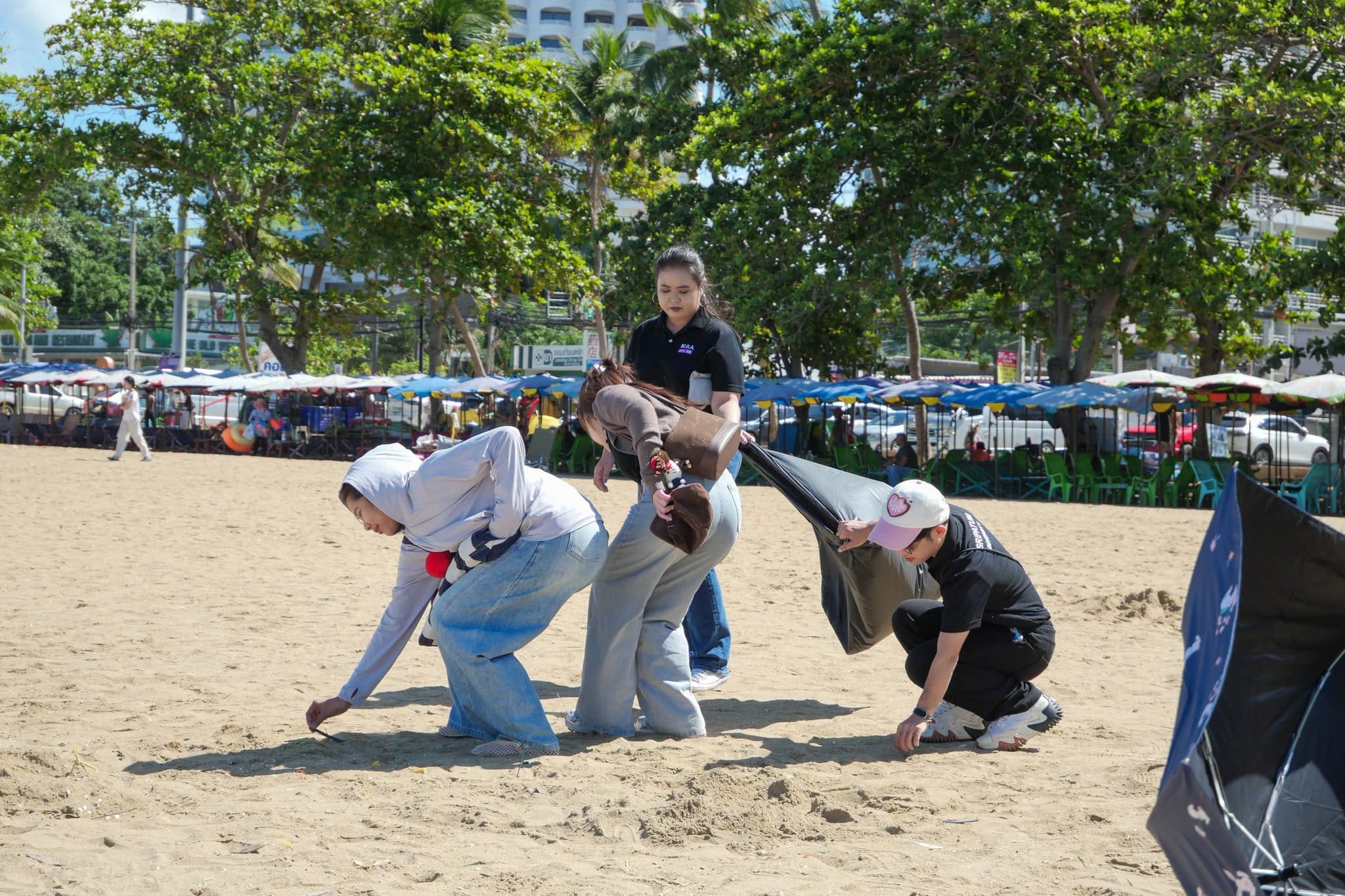
- Cleaner coasts: Graduate College of Management students collected and sorted waste on Jomtien Beach (20–21 June 2026) and learned how litter harms marine ecosystems.
Learning and research for responsible production
- Games and challenges: The College of Logistics and Supply Chain created “Next Station Zero Waste,” a board game that teaches the journey of waste from source to reuse (January 2026).
- Student awards:
- The “Plastic is Hero” short-video contest (first prize).
- The Rewastec Circular Challenge 2025 (third runner-up).
- Rabbit Start Quickathon #5, won by ECOSHROOM, which grows mushroom spawn on used coffee grounds.
- Short environmental dramas at the Asia Environmental and Waste Management Expo (February 2026).
- Skills for business:
- The Co-Create Sustainability Hack 2025 with Ngee Ann Polytechnic, Singapore (September 2025).
- A “Green Skills for Smart SMEs” course on circular-economy marketing for entrepreneurs, supported by the Ministry of Higher Education, Science, Research and Innovation (MHESI).
- Hospitality students studying the waste systems of a green hotel (March 2026).
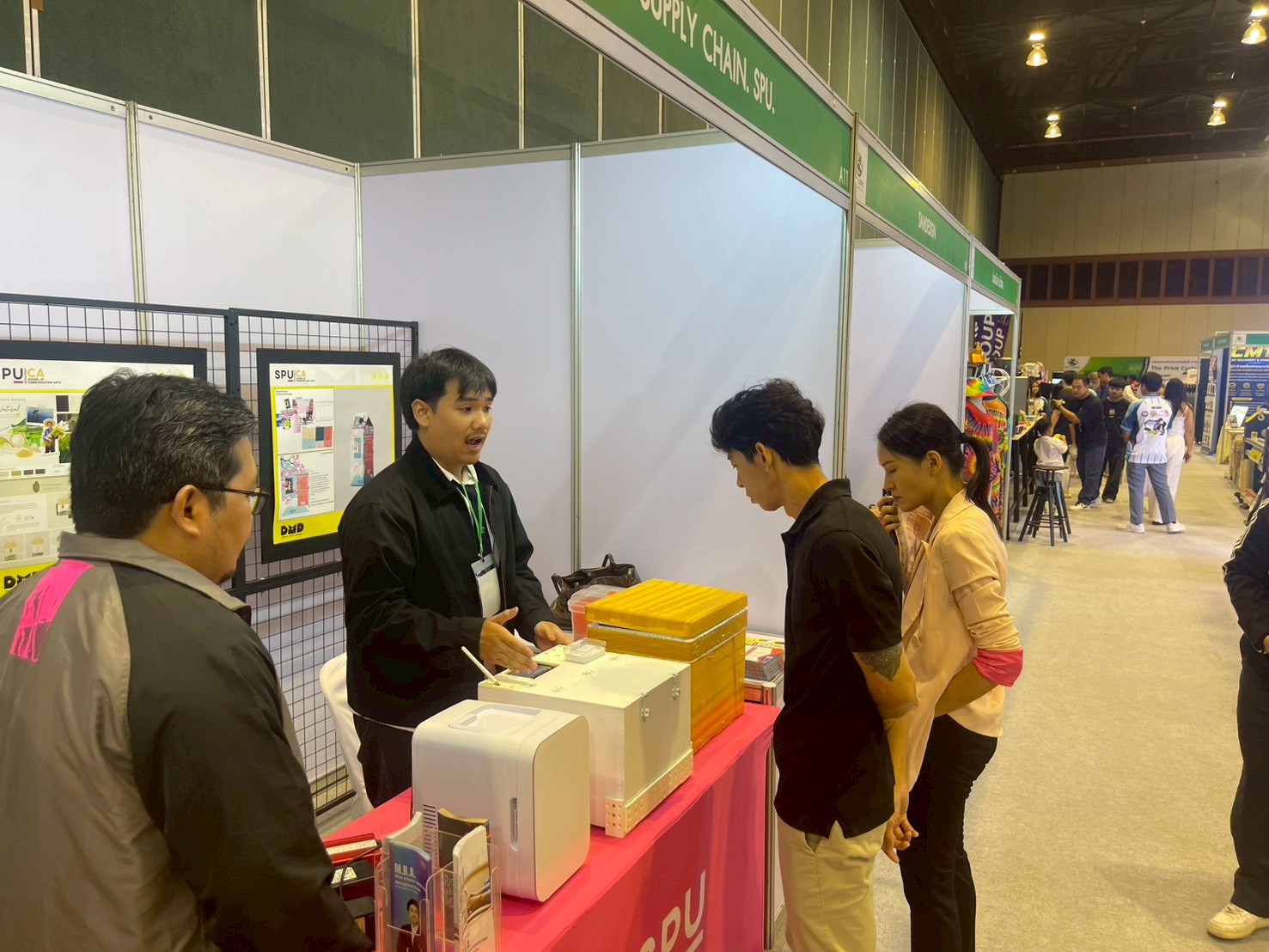
- Research that closes loops: SPU Chonburi showed Cold Chain Boxes made from natural and waste materials at PCT EXPO 2026 (July 2026). Engineering staff presented work on lightweight blocks from recycled glass and reusing construction waste in place of cement.
Reporting in public
SPU released its annual SPU SDGs Report 2024 as a free public PDF in November 2025. Each SDG 12 measure also has its own evidence page on the SPU SDGs website.
Next year, SPU aims to:
- add environmental and supplier-screening criteria to purchasing and service contracts
- strengthen tracking of hazardous waste
- widen community upcycling so that more households can earn from waste
“Waste is a resource we haven’t used yet.”
At Sripatum University, reporting on SDG 12 is a promise kept in public. Each year we show how we buy, use and recover resources more responsibly, and how we help our neighbours turn leftovers into opportunity.
#SPU #SPUSDGs #SripatumUniversity #ResponsibleConsumption #CircularEconomy #ZeroWaste #SDGReport #Transparency
รายงานความก้าวหน้า SDG 12 ปี 2568/69: มหาวิทยาลัยศรีปทุมจัดหาอย่างรับผิดชอบ วัดทุกเส้นทางของขยะ และเปลี่ยนของเหลือทิ้งเป็นรายได้
หนึ่งหน้า หนึ่งปี ครบทุกตัวชี้วัด SDG 12 รายงานต่อสาธารณะว่า SPU จัดหาอย่างเป็นธรรม ลดพลาสติกและของใช้ครั้งเดียวทิ้ง ติดตามขยะที่เกิดขึ้น และร่วมกับชุมชนมองขยะเป็นทรัพยากรได้อย่างไร
 มหาวิทยาลัยศรีปทุมเผยแพร่ความก้าวหน้าตาม SDG 12 ต่อสาธารณะทุกปี รายงานนี้ครอบคลุมปีการศึกษา 2568/69 (1 ส.ค. 2568 – 31 ก.ค. 2569) จัดตามด้านที่ Times Higher Education ใช้วัด ได้แก่ นโยบายการดำเนินงาน การติดตามขยะและการรีไซเคิล และการเผยแพร่รายงานความยั่งยืน
ภายใต้ Alpha Ready Roadmap สำนักงานอาคารสถานที่เป็นผู้นำงานนี้ ร่วมกับคณะต่าง ๆ วิทยาเขตชลบุรี และหน่วยงานกิจการนักศึกษา เป้าหมายร่วมคือให้การบริโภคอย่างรับผิดชอบเป็นส่วนหนึ่งของชีวิตประจำวันในมหาวิทยาลัย
ด้านการจัดหาอย่างเป็นธรรม
- ประกาศนโยบายการจัดหาทรัพยากรและการจัดการขยะอย่างยั่งยืน (9 ก.ย. 2566) ใช้ทั้งมหาวิทยาลัย ครอบคลุมการจัดหาอาหารและวัสดุอย่างมีจริยธรรม ขยะอันตราย การวัดขยะฝังกลบและขยะรีไซเคิล การลดพลาสติก และการลดของใช้ครั้งเดียวทิ้ง นโยบายเปิดเผยต่อสาธารณะและทบทวนทุกปีผ่านระบบประกันคุณภาพ
- ร้านอาหารในมหาวิทยาลัยดำเนินการในสถานที่ที่ได้รับอนุญาต ผู้ประกอบการผ่านการอบรมสุขาภิบาลและตรวจสุขภาพ และได้รับการส่งเสริมให้ใช้วัตถุดิบท้องถิ่นและคัดแยกขยะ
- ข้อบังคับว่าด้วยประมวลจริยธรรม พ.ศ. 2569 (31 ก.ค. 2569) กำหนดให้ผู้บริหารและบุคลากรใช้ทรัพย์สินอย่างคุ้มค่าและหลีกเลี่ยงการกระทำที่กระทบสิ่งแวดล้อมอย่างมีนัยสำคัญ
ด้านการจัดการและการวัดขยะ
- ขยะสารเคมี ขยะอิเล็กทรอนิกส์ และขยะห้องปฏิบัติการ ถูกคัดแยกตั้งแต่ต้นทาง เก็บในภาชนะติดฉลาก และส่งให้ศูนย์กำจัดที่ได้มาตรฐาน บุคลากรและนักศึกษาได้รับการอบรมการจัดการอย่างปลอดภัย
- ขยะถูกแยกเป็นขยะรีไซเคิล ขยะอินทรีย์ ขยะอันตราย และขยะทั่วไป ธนาคารขยะ SPU ชั่งน้ำหนักขยะรีไซเคิลทุกรอบตามใบรับซื้อ ขยะอาหารและขยะที่ส่งฝังกลบก็มีการบันทึกด้วย ข้อมูลรายเดือนรวมเป็นภาพรายปีที่ใช้ตัดสินใจว่าจะลดขยะประเภทใดต่อไป
- แคมเปญ ECOLIFE in U เปิดตัวในงาน Freshy Day (9 ก.ค. 2569) เพื่อปลูกฝังการคัดแยกและการใช้ชีวิตแบบขยะน้อยให้นักศึกษาใหม่
ด้านการลดพลาสติกและของใช้ครั้งเดียวทิ้ง
- ศูนย์หนังสือมหาวิทยาลัยจัดวันงดถุงพลาสติกและรณรงค์ใช้ถุงผ้า
- งาน SPUBUS Market Fair ครั้งที่ 13 แนวคิด “Green Business” (6 พ.ย. 2568) นักศึกษาขายอาหารในบรรจุภัณฑ์ย่อยสลายได้และสินค้าจากวัสดุรีไซเคิล
- ร้านค้า ทีมทำความสะอาด และผู้รับจ้างต้องลดของใช้ครั้งเดียวทิ้งและคัดแยกขยะ งานปรับปรุงอาคารโดยผู้รับเหมาภายนอกในปี 2568/69 เป็นไปตามนโยบายอนุรักษ์พลังงานและสิ่งแวดล้อม (ปก.100/2565)
ด้านเศรษฐกิจหมุนเวียนร่วมกับชุมชน
- คณะวิศวกรรมศาสตร์ประชุมร่วมกับจังหวัดสมุทรสงคราม (5 ก.พ. 2569) และจัดเวิร์กช็อปแปรรูปเปลือกหอยแมลงภู่เป็นอิฐบล็อกกับชุมชน (9 ก.พ. 2569)
- วิทยาเขตชลบุรีสอนเปลี่ยนฝาขวดพลาสติกเป็นพวงกุญแจรักษ์โลก ให้ผู้สูงอายุโรงเรียนผู้สูงอายุเทศบาลเมืองชลบุรี และให้เยาวชนและสตรีตำบลคลองตำหรุ (มิ.ย. 2569)
- เด็กในชุมชนบางบัวเล่นเกมคัดแยกขยะในงาน “ศรีปทุม ส่งสุข สู่ชุมชน #2” (ม.ค. 2569)
- นักศึกษาวิทยาลัยบัณฑิตศึกษาด้านการจัดการเก็บและคัดแยกขยะชายหาดจอมเทียน (20–21 มิ.ย. 2569)
ด้านการเรียนรู้และงานวิจัย
- วิทยาลัยโลจิสติกส์ฯ พัฒนาบอร์ดเกม “Next Station Zero Waste” (ม.ค. 2569)
- รางวัลของนักศึกษา:
- เวที Plastic is Hero
- Rewastec Circular Challenge 2025
- ECOSHROOM เห็ดจากกากกาแฟ
- ละครสั้นสิ่งแวดล้อมในงาน AEWME
- การพัฒนาทักษะ:
- Co-Create Sustainability Hack 2025 ร่วมกับ Ngee Ann Polytechnic สิงคโปร์
- หลักสูตร Green Skills for Smart SMEs ที่ อว. สนับสนุน
- การศึกษาระบบจัดการขยะของโรงแรมสีเขียว
- งานวิจัย: Cold Chain Box จากวัสดุเหลือใช้ในงาน PCT EXPO 2026 และงานวิจัยคอนกรีตบล็อกจากเศษแก้วรีไซเคิล
ด้านการรายงานต่อสาธารณะ
มหาวิทยาลัยเผยแพร่ SPU SDGs Report 2024 เป็น PDF สาธารณะเมื่อ พ.ย. 2568 และทุกตัวชี้วัด SDG 12 มีหน้าหลักฐานบนเว็บไซต์ SPU SDGs
ก้าวต่อไป:
- เพิ่มเกณฑ์สิ่งแวดล้อมในสัญญาจัดซื้อจัดจ้าง
- ติดตามขยะอันตรายให้เข้มข้นขึ้น
- ขยายการอัปไซเคิลกับชุมชนให้สร้างรายได้มากขึ้น
“ขยะคือทรัพยากรที่เรายังไม่ได้ใช้”
สำหรับมหาวิทยาลัยศรีปทุม การรายงาน SDG 12 คือคำมั่นที่รักษาต่อหน้าสาธารณชน ทุกปีเราแสดงให้เห็นว่าเราจัดหา ใช้ และหมุนเวียนทรัพยากรอย่างรับผิดชอบขึ้นอย่างไร และช่วยชุมชนเปลี่ยนของเหลือทิ้งเป็นโอกาสได้อย่างไร
#SPU #SPUSDGs #มหาวิทยาลัยศรีปทุม #การบริโภคอย่างรับผิดชอบ #เศรษฐกิจหมุนเวียน #รายงานSDG #ความโปร่งใส